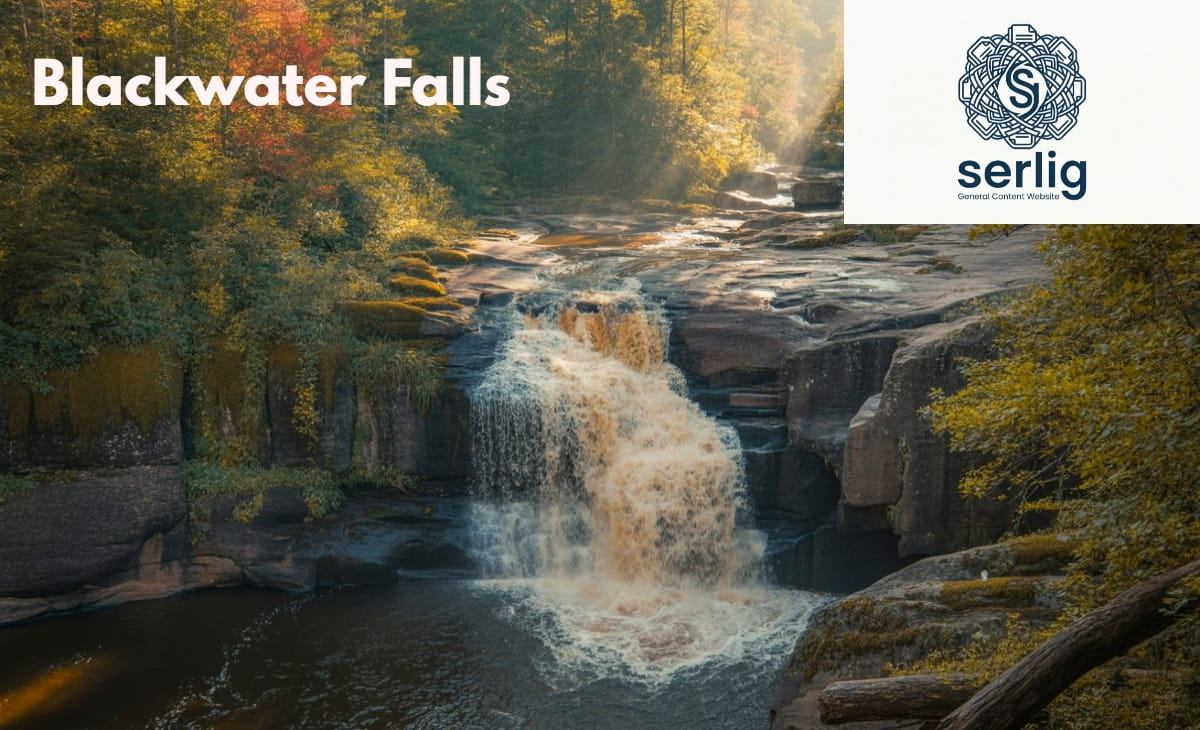
Blackwater Falls: The Amber Waterfall West Virginia Has Been Hiding From You
Tucked deep in the Allegheny Mountains of Tucker County, West Virginia, Blackwater Falls defies easy description. Its waters pour in a dramatic amber curtain, plunging nearly 60 feet over ancient sandstone. They crash into the rugged depths of Blackwater Canyon with a roar you feel before you see it. This waterfall draws visitors in every season. Hikers, photographers, history buffs, and families all find something worth the drive. What they discover is rare: a place of genuine, unfiltered wildness.
QUICK FACT TABLE
| Detail | Info |
| Location | Tucker County, West Virginia, USA |
| Waterfall Height | 57–62 feet (17–19 m) |
| Water Color | Amber/tea-colored (from hemlock & spruce tannins) |
| Park Size | 2,358 acres |
| Park Established | 1937 |
| Trails | 20+ miles |
| Elevation at Park Entry | 3,040 feet |
| Nearest Town | Davis, WV (2 miles away) |
| Best Season to Visit | Fall (peak foliage) |
| Park Address | 1584 Blackwater Lodge Road, Davis, WV 26260 |
The Signature Color: Why Is the Water Black?
The first question every visitor asks is simple — why is the water so dark? The Blackwater River moves slowly through the wetlands and peat bogs of Canaan Valley before entering the state park. Along the way, it picks up tannins released by fallen hemlock and red spruce needles. These natural organic acids stain the water a deep amber or tea-like hue. That color gives the river — and its famous falls — their evocative name.
The process is entirely natural and harmless. But it creates a visual effect most visitors have never seen before. In direct sunlight, the water shimmers with gold and brown. On overcast days, it shifts to something darker and almost ink-like. Photographers plan their visits around the light. Early morning and late afternoon produce the richest tones. The falls glow with warm, autumnal color at those hours — in every season, not just fall.
Geology: Ancient Rock, Young Canyon
The geology here is as striking as the color. The falls drop over Connoquenessing sandstone from the Middle Pottsville Formation. This resistant rock dates back to the Pennsylvanian Age — roughly 300 million years old. The underlying geology is ancient. The canyon itself, however, is young in geological terms.
The Blackwater River picks up speed once it leaves Canaan Valley. It has carved a spectacular, near-vertical-walled gorge through the surrounding plateau. The river enters the park at 3,040 feet in elevation. At the main falls, it drops 57 to 62 feet in a single dramatic plunge. It then descends another 560 feet through the canyon before leaving the park. Total drop over just ten miles: over 1,500 feet. The result is one of the most impressive river gorges in the eastern United States.
What Makes the Canyon Walls So Dramatic?
The walls rise nearly vertical on both sides of the gorge. Old-growth forest drapes the ridges. Rocky outcroppings jut from the slopes. Overlooks perch at the rim, offering sweeping views down into the canyon floor far below. The combination of height, depth, and dense forest makes Blackwater Canyon a place that rewards both quick visits and extended exploration.
History: From Frontier Explorations to State Park
Long before Blackwater Falls drew tourists, Native American peoples used the Seneca Trail through this region. That military road stretched over 500 miles from Niagara Falls to the Gulf of Mexico. Tucker County served mainly as a hunting ground and travel corridor. No permanent Native settlements existed in the canyon itself.
Early Explorers and Literary Fame
In 1736, a survey party organized by Thomas Lord Fairfax ventured into the Canaan Valley region. They mapped inherited lands and marked the first fountain of the Potomac. European literary attention arrived much later. In 1851, adventurer Philip Pendleton Kennedy explored the area with his companions. One of them, illustrator David Hunter Strother — pen name “Porte Crayon” — wrote and illustrated “The Virginia Canaan.” His work introduced the falls to a wide readership for the first time.
By 1858, the Dobbin House stood near the falls. It provided popular lodging through the 1860s and 1870s. Then industrial logging arrived and changed everything.
Logging, Loss, and Recovery
The late 19th century brought the railroad into Tucker County. Timber companies stripped vast stands of virgin forest from the highlands. The ecosystem shifted dramatically. What visitors see today is largely second-growth forest. It is thriving and beautiful — but different from the ancient wilderness those first explorers encountered.
From Donated Land to State Park
Protection began in the 1930s. The West Virginia Power and Transmission Company owned much of Blackwater Canyon. It began donating and leasing land to the state. A 446-acre scenic overlook area came first, in 1934. The state formally established Blackwater Falls State Park in 1937. More land arrived in the 1950s from the same company and from the U.S. Forest Service. Governor Cecil Underwood added 25 acres in 2000. Governor Bob Wise added 500 more acres in 2002. The park now covers 2,358 acres.
The Falls and Canyon Today
Reaching the Main Falls
The falls are easy to reach for visitors of all fitness levels. A boardwalk trail descends more than 200 steps to an observation deck right at the base of the falls. You get close enough to feel the mist. For a gentler route, the quarter-mile Gentle Trail on the opposite side gives another viewing angle with far less strenuous terrain. Several viewing platforms sit along the route. Everyone can enjoy the falls — regardless of mobility.
Beyond the Main Falls: Elakala and the Overlooks
Elakala Falls is the park’s hidden gem. It is a series of four tiered cascades where the Shay Run tributary meets Blackwater Canyon. A short trail from the lodge leads there. Smaller than the main falls, Elakala feels more intimate — quiet, mossy, and tucked away. Many visitors say it is equally beautiful.
Pendleton Point Overlook and Lindy Point sit at the canyon rim. Lindy Point rises 3,000 feet above the canyon floor. The views stretch across Blackwater Canyon and into the Monongahela National Forest. Few overlooks in the eastern United States match this panorama.
Hiking and Outdoor Recreation
Trails for Every Level
Over 20 miles of trails wind through the park. Every skill level finds a match here.
Easy trails include the Blackwater Falls Boardwalk Trail (0.4-mile loop), the Balanced Rock Trail, and the Gentle Trail. Families with young children use these most.
Moderate trails include the Lindy Point Trail — a rhododendron-draped path to the canyon rim overlook — and the Balsam Fir Trail, a peaceful loop through beech, maple, and fragrant balsam fir groves starting at the Harold Walters Nature Center.
Challenging trails include the Pase Point Trail, Yellow Birch Trail, and sections of the North Rim Trail. These routes offer steeper climbs, rock formations, and far more solitude.
Water Activities and Guided Events
Pendleton Lake offers kayak, canoe, paddleboard, and paddleboat rentals during summer. Anglers fish for bass, bluegill, catfish, and trout in the lake and the stocked Blackwater River. The park runs guided events year-round: spring wildflower walks, birding pilgrimages, and the Walk Between the Parks — an 8-mile guided hike linking Blackwater Falls State Park with Canaan Valley Resort State Park.
Wildlife and Birdlife
The dense red spruce and hemlock forest shelters a wide range of wildlife. White-tailed deer appear frequently along the trails. Black bears live in the park, though most hikers never spot one. Birdwatchers find the park especially rewarding. Thrushes, warblers, pileated woodpeckers, and songbirds fill the canopy. Bald eagles have been spotted in the canyon. Each spring, the forest floor blooms with trillium, trout lily, and other native wildflowers. The annual spring wildflower walk draws nature lovers from across the region.
Four Seasons of Splendor
Spring: Rushing Water and Wildflowers
Snowmelt swells the river. The falls thunder at full force. Wildflowers blanket the forest floor. Migratory birds return and fill the trees with sound. Spring is the most dramatic season for water volume.
Summer: Cool Mountain Escape
Mountain temperatures stay well below the lowland heat. Shaded trails stay comfortable even in July. Paddling on Pendleton Lake, hiking to overlooks, and evening walks along the canyon rim define a summer visit here.
Autumn: Peak Season for Color
Fall draws the largest crowds — and for good reason. Red maple, yellow birch, American beech, and black cherry trees all turn together. The canyon ignites in orange, crimson, and gold. The amber water of the falls, framed by fall foliage, creates scenes that photographers travel hundreds of miles to capture.
Winter: Ice, Snow, and the East Coast’s Longest Sled Run
The falls partially freeze in winter, forming spectacular ice formations along the edges. The park runs the longest sled run on the East Coast — a groomed quarter-mile slope with a magic carpet conveyor back to the top. Cross-country skiers and snowshoers also use the trail network. A winter morning at the canyon overlook, with fresh snow on the trees and mist over the gorge, is one of the most peaceful experiences West Virginia offers.
Where to Stay and Practical Tips
Blackwater Lodge sits on the canyon rim. It offers 54 recently renovated rooms, an indoor swimming pool, and a fitness center. The park also has 39 cabins of varying sizes and both electric and primitive camping sites.
The park sits about 2 miles southwest of Davis, West Virginia. It is roughly 3.5 hours from Washington, D.C. and 1.5 hours from Morgantown. Cell service is limited in much of this area. Download maps and trail info before you arrive. Mountain weather shifts fast — always pack layers. Bring waterproof footwear, especially after rain or in winter.
Conservation: A Place Worth Protecting
The Blackwater Falls story is also a conservation story. Industrial logging once scarred this landscape. Over nearly a century, the forest has grown back. The park expanded steadily through donations and government purchases. Organizations like Friends of Blackwater continue working to protect the broader canyon watershed beyond park boundaries. They recognize that the health of the falls depends on the health of the entire river system upstream.
Wild places like this are increasingly rare. Blackwater Falls shows that recovery is possible. Given time and protection, nature reclaims its grandeur. The amber water still tumbles over the ancient sandstone. The canyon still holds that breath-catching depth. For anyone who makes the drive into the West Virginia highlands, the reward waits exactly where it has always been.
Conclusion
Blackwater Falls is not just a waterfall. It is a complete natural experience — geologically ancient, ecologically rich, historically layered, and visually unforgettable. Its amber cascade has drawn visitors since the 1850s and continues to reward every traveler who makes the journey. Whether you visit in spring’s rush, summer’s cool shade, autumn’s explosion of color, or winter’s icy silence, the park delivers something memorable. Plan your visit, pack your layers, and go see one of the East’s most remarkable places for yourself.
If you enjoyed this article, check out this related post: Kilgore Falls: Maryland’s Hidden Gem and Second-Highest Waterfall
Frequently Asked Questions
Why is the water at Blackwater Falls dark-colored?
The water looks amber or tea-colored because of tannins. Fallen hemlock and red spruce needles release these natural organic acids into the slow-moving Blackwater River upstream. The tannins build up as the river passes through bogs and wetlands in Canaan Valley, staining the water before it reaches the falls.
How tall is Blackwater Falls?
Blackwater Falls drops between 57 and 62 feet (https://serlig.co.uk/kilgore-falls-marylands-hidden-gem-and-second-highest-waterfall/17–19 meters) at the main cascade. Different sources cite slightly different figures depending on how researchers measure the exact drop. It ranks among the highest above-ground waterfalls in West Virginia.
Is Blackwater Falls open year-round?
Yes. Blackwater Falls State Park stays open throughout the year. Each season offers different experiences — wildflowers in spring, cool trails in summer, fall foliage in autumn, and sledding and frozen falls in winter. Lodge and cabin accommodations are available in all seasons.
What is the best time to visit Blackwater Falls?
Fall is the most popular time, when the canyon fills with red, orange, and gold foliage. However, winter visits are increasingly popular for the frozen falls and East Coast’s longest sled run. Spring brings peak water volume. Summer offers the best hiking comfort due to cool mountain temperatures.
Are there easy trails to see the falls without a difficult hike?
Yes. The Gentle Trail is a relatively flat, quarter-mile path that reaches a viewing area on the opposite side of the falls. The main Boardwalk Trail descends over 200 steps to an observation deck near the base. Both routes suit families and visitors who prefer less strenuous terrain. Multiple viewing platforms along the way offer good views even before reaching the bottom.