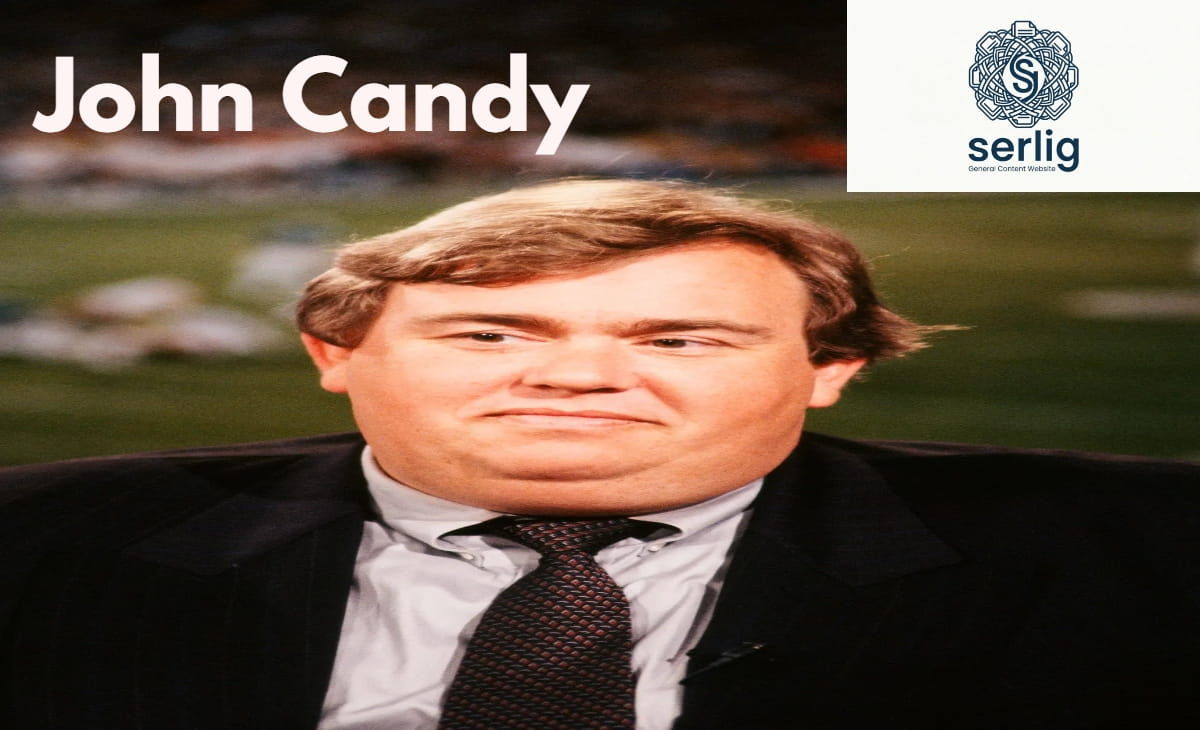
John Candy: The Gentle Giant of Comedy Who Made the World Laugh and Left Too Soon
Some comedians make you laugh. A rare few make you feel something deeper — a warmth, a tenderness, a genuine human connection. John Candy was one of those rare performers. What set him apart was a combination of physical humor and emotional depth. As one critic noted, he “could be as funny as anyone — but what set him apart was a tenderness, a gentle emotional candor that made him instantly credible and lovable.”
John Franklin Candy was born on October 31, 1950, and died on March 4, 1994, at just 43 years old. In those 43 years, he built a career that spanned television, film, and live performance. He made audiences around the world laugh until they cried — and then, in his more dramatic moments, cry for entirely different reasons. Moreover, he did it all with a warmth and generosity of spirit that made him genuinely beloved by everyone who worked with him.
His story is one of talent, hard work, personal struggle, and ultimately, a legacy that continues to grow stronger with every passing year.
Quick Facts
| Detail | Information |
| Full Name | John Franklin Candy |
| Born | October 31, 1950 — Newmarket, Ontario, Canada |
| Died | March 4, 1994 — Durango, Mexico |
| Age at Death | 43 years old |
| Nationality | Canadian |
| Spouse | Rosemary Hobor (married 1979) |
| Children | 2 — Jennifer and Christopher Candy |
| Occupation | Actor, Comedian, Writer |
| Years Active | 1971 – 1994 |
| Known For | Uncle Buck, Planes, Trains and Automobiles, Cool Runnings, SCTV |
| Cause of Death | Heart attack |
| Burial Place | Holy Cross Cemetery, Culver City, California |
Early Life: Growing Up in Toronto
John Candy was born on October 31, 1950, in Toronto, Canada, and grew up in the city’s East York neighborhood. When he was about four years old, Candy lost his father. His father died of a heart attack at age 35 — a loss that would cast a long shadow over John’s own life and health decades later.
Following that loss, Candy was raised by his mother, with the help of his aunt and grandparents. Educated in Catholic schools, he played football and hockey. He discovered acting in high school, appearing in a number of productions. Those early years gave him something important — a strong sense of community and an understanding of ordinary people. Furthermore, that understanding would later become the foundation of every lovable character he played on screen.
His mother was of Ukrainian and Polish ancestry. In 1969, Candy enrolled at Centennial Community College in Toronto, where he studied journalism and acting. In 1971, he left school to pursue an acting career. He met and befriended future collaborator Dan Aykroyd around this time.
That friendship with Aykroyd hinted at the world Candy was about to enter. Toronto in the early 1970s was alive with creative energy. Comedy, in particular, was finding its voice. Candy, therefore, arrived at exactly the right moment.
The Second City: Where It All Began
After graduating college, his first film role was a small, uncredited appearance in the 1973 film Class of ’44. He appeared in several smaller films and television bit parts during the early 1970s. In 1973, at just 22 years old, he joined the resident ensemble of The Second City Toronto.
The Second City was not merely a comedy club. It was a training ground for some of the greatest comic minds of the twentieth century. John Belushi, Bill Murray, Gilda Radner, and Martin Short all passed through its doors. Candy fit right in. He was disciplined, creative, and — crucially — generous with his fellow performers. His instinct was always to make the scene work, not just to make himself look good. That generosity, consequently, made him one of the most popular members of any ensemble he joined.
In 1976, he joined the cast of Second City’s television show, SCTV. The show gained such quick and broad popularity that NBC picked it up in 1981. There, the show soared to new heights, picking up a pair of writing Emmys. His many popular show characters included street-beat TV host “Johnny LaRue,” 3-D horror auteur “Doctor Tongue,” talk-show sidekick “William B. Williams,” and clarinetist Yosh Shmenge” of the Happy Wanderers.
His work on the show also featured impressions of Julia Child, Orson Welles, and Luciano Pavarotti. Candy won Emmy Awards for the show’s writing in 1981 and 1982. Those Emmy wins confirmed what many already suspected — John Candy was not just a funny face. He was a genuinely skilled writer and craftsman of comedy.
Breaking Into Hollywood
In 1979, Candy took a hiatus from the show to restart his film career. He landed small roles in Steven Spielberg’s big-budget comedy 1941 and in The Blues Brothers (1980) with Belushi and Aykroyd, before his key role in smash hit Stripes with Bill Murray and Harold Ramis — one of the most successful films of the year. Turns in Going Berserk, National Lampoon’s Vacation, and Splash soon followed, cementing Candy’s legacy as one of comedy’s brightest stars.
Candy had a breakthrough with his turn as the sleazy brother of Tom Hanks’ character in Splash (1984). That role showed Hollywood something important. Candy could hold his own opposite major stars. He could anchor a scene without overpowering it. Additionally, he brought a natural likability to even his most flawed characters — a rare quality that directors and producers quickly learned to appreciate.
After Splash, offers came flooding in. Hollywood had found its big-hearted leading man. Furthermore, the timing could not have been better — the mid-1980s comedy boom was just getting started.
The John Hughes Years: Planes, Trains, and Uncle Buck
No period in John Candy’s career shines brighter than his collaboration with director and writer John Hughes. Hughes understood Candy instinctively. He saw beyond the physical comedy and recognized the emotional truth underneath.
One of the finest roles in Candy’s career came with 1987’s Planes, Trains, and Automobiles, with Candy portraying a lonely, chatty, traveling salesman with that everyman quality he was always able to convey beneath the laughter. The film paired him with Steve Martin. On paper, they seemed like an odd match — Martin’s neurotic perfectionism against Candy’s warm chaos. In practice, however, the combination was magical.
The film’s final scene — where Candy’s character Del Griffith is revealed to be homeless and grieving — remains one of the most quietly devastating moments in American comedy. Audiences who had been laughing for 90 minutes suddenly found tears running down their faces. That is the John Candy effect. Therefore, that scene alone explains why he mattered so deeply.
Candy landed another classic role in Uncle Buck (1989), which was about a bumbling uncle who must look after his brother’s three children. The film was a massive hit. Moreover, it gave Candy the rare opportunity to carry a movie entirely on his own shoulders — and he did so with effortless charm. Uncle Buck became one of the defining characters of his career, a role so perfectly suited to him that it is impossible to imagine anyone else playing it.
Cool Runnings and Career Resurgence
Following the 1991 flop Nothing But Trouble, Candy broke free from a string of difficult films with a more dramatic turn, starring in Only the Lonely (1991) opposite screen legend Maureen O’Hara. A chance role as a crooked New Orleans attorney in the epic JFK (1991) further proved that Candy’s talents had been underutilized by Hollywood.
Then came Cool Runnings (1993). Candy seemed to be enjoying a career upswing in his well-reviewed role as a former Olympic star charged with training a Jamaican bobsled team. The film grossed $68.9 million domestically. The audience loved it. Critics noticed that something had shifted in Candy’s work — a new confidence, a new depth. He was no longer simply the funny fat man. He was becoming a genuine actor.
Friends and colleagues noticed the shift too. Candy was taking his craft more seriously. He was making smarter choices. Consequently, the industry was starting to view him differently — not just as a comedy workhorse, but as a talent capable of real dramatic range.
Personal Life: The Man Behind the Laughter
John Candy married Rosemary Hobor in 1979. Together they had two children. Those who knew him personally describe a man utterly unlike the chaotic characters he played on screen. He was thoughtful, generous, and deeply committed to his family. Furthermore, he was famously kind to fans and crew members alike — the kind of star who remembered everyone’s name and made everyone feel seen.
He was very sensitive about his weight, and in the 1990s tried to lose weight and quit smoking, also he was aware that heart attacks ran in his family — both his father and his grandfather had died of them — and Candy wanted to prevent that from happening to him.
He also had a deep love for sports, also h served as co-owner of the Toronto Argonauts football team. For Candy, sports were not merely entertainment. They connected him to the Canadian identity he carried with pride throughout his entire Hollywood career.
Death and Its Aftermath
In the mid-1990s, Candy filmed the Michael Moore comedy Canadian Bacon (1995), then went to Mexico to film the western spoof Wagons East (1994). There, he had a heart attack and passed away in March 1994.
He died on March 4, 1994, in Durango, Mexico, at age 43. The news shocked the world. He had seemed, by all accounts, on the verge of a remarkable second act. The roles were getting better. The performances were getting deeper. And then, suddenly, he was gone.
Canadian Bacon (1995) was released a year after his death as his final film. Wagons East also received a posthumous release. Neither film did justice to where his talent was heading. Nevertheless, both stand as reminders of a man who showed up, did the work, and gave everything he had until the very end.
Legacy: Why John Candy Still Matters
More than three decades after his death, John Candy’s films continue to find new audiences. Children who watch Cool Runnings today laugh just as hard as their parents did in 1993. Teenagers discovering Planes, Trains and Automobiles for the first time experience the same emotional gut-punch that caught audiences off guard in 1987.
Police Academy legend Tim Kazurinsky once said that “John wasn’t just a one in a million guy — he was a one in a hundred million guy.” Incredibly talented, full of heart, and extraordinarily hard working, with over forty movies under his belt, Candy was a screen icon during the 1980s and early 1990s.
His influence on comedy is immeasurable. Performers like James Gandolfini, Melissa McCarthy, and Rebel Wilson have all cited the importance of what Candy established — that larger performers could be leading men and women, not just supporting comic relief. Furthermore, he proved that physical comedy and emotional depth are not opposites. They can, in the right hands, strengthen each other.
In short, John Candy changed what Hollywood comedy could be. He made room for warmth in a genre that often settles for cleverness. Moreover, he reminded audiences that the funniest moments in life are usually the most human ones.
Conclusion: The Gentle Giant the World Still Misses
John Candy lived 43 years. In that time, he built a body of work that continues to bring joy, laughter, and genuine emotion to millions of people around the world. He came from a modest Toronto neighborhood. He built himself up through hard work, discipline, and an almost supernatural gift for connecting with an audience. Furthermore, he did it all while remaining, by every account, one of the kindest and most generous human beings his industry had ever seen.
He left too soon. There is no question about that. The career that was finally finding its full range — dramatic roles, complex characters, the kind of work that wins serious awards — was cut short before it could fully bloom.
Nevertheless, what he left behind is extraordinary. Planes, Trains and Automobiles. Uncle Buck. Cool Runnings. Splash. Spaceballs. Characters so alive, so warm, so genuinely funny that they have outlasted trends, decades, and even the man himself.
In the end, John Candy did not need a long life to leave a lasting one. He simply needed to be exactly who he was — and that, it turned out, was more than enough.
You may also like this article covering a similar topic: From Firefly to Green Lantern: How Nathan Fillion Became Hollywood’s Most Unbeatable Leading Man
Frequently Asked Questions
Who was John Candy?
John Candy was a Canadian actor and comedian born on October 31, 1950. He rose to fame through the Second City comedy troupe and SCTV in the 1970s. He later became one of Hollywood’s most beloved comedy stars. His most iconic films include Uncle Buck, Planes, Trains and Automobiles, and Cool Runnings.
How did John Candy die?
John Candy died of a heart attack on March 4, 1994, in Durango, Mexico. He was 43 years old at the time. He was filming the western comedy Wagons East when he passed. Heart disease ran in his family — both his father and grandfather had also died of heart attacks.
What are John Candy’s most famous movies?
John Candy starred in many beloved films throughout his career. His most famous works include Planes, Trains and Automobiles (1987), Uncle Buck (1989), Cool Runnings (1993), Splash (1984), and Spaceballs (1987). He also had a memorable cameo in Home Alone (1990). Each film showcased his unique blend of physical comedy and emotional warmth.
Was John Candy married?
Yes. John Candy married Rosemary Hobor in 1979. The couple remained together until his death in 1994. They had two children together. By all accounts, Candy was deeply devoted to his family and kept his personal life largely private despite his enormous public fame.
What was John Candy’s net worth at the time of his death?
At the time of his death in 1994, John Candy’s net worth was estimated at approximately $15 million. However, it later emerged that he had significant debts, partly due to his co-ownership of the Toronto Argonauts football team and various business ventures. Despite financial pressures, he continued working at a demanding pace right until his final days.