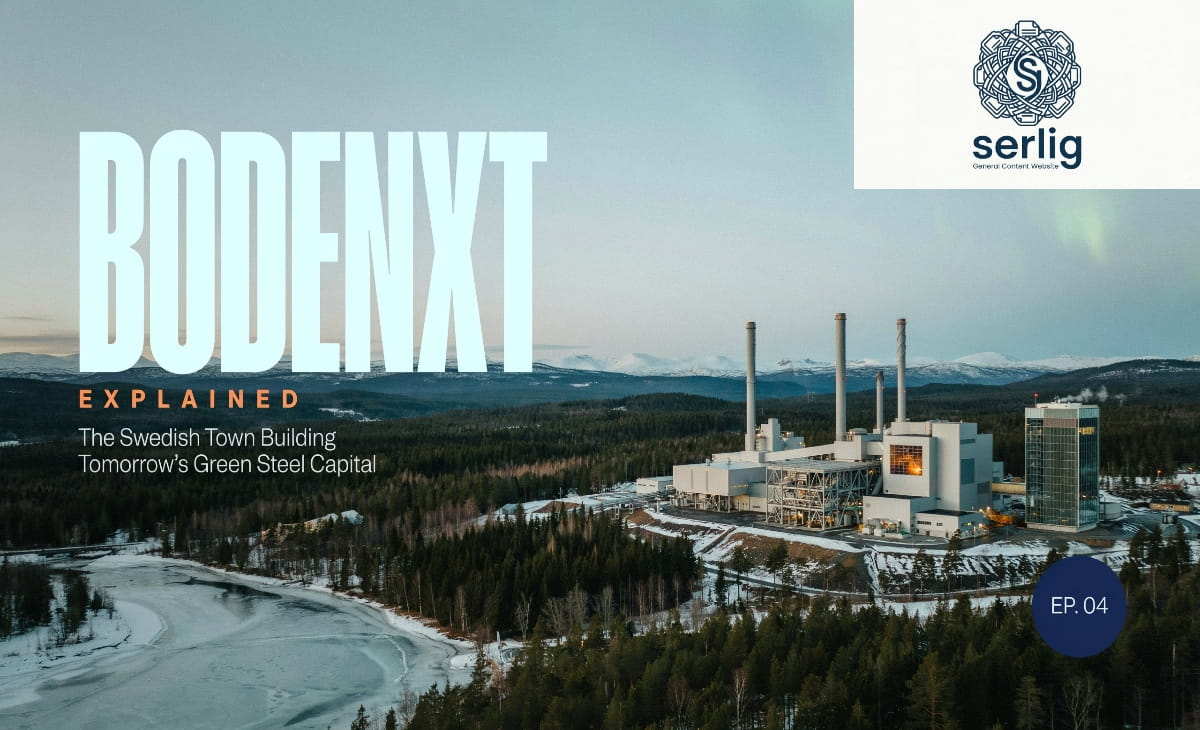
Bodenxt Explained: The Swedish Town Building Tomorrow’s Green Steel Capital
A small town in northern Sweden just crossed 28,000 residents. That number keeps climbing faster than officials predicted. Behind this growth sits a single name: Bodenxt.
The word might look unfamiliar. But it represents something real, active, and already changing daily life in Boden. Local leaders call it a coordinated platform. It aims to turn Boden into the green heart of northern Sweden.
This article breaks down what Bodenxt is. It covers why it exists, the major projects behind it, and what it means for the region and beyond.
Quick Facts: Bodenxt at a Glance
| Fact | Detail |
| What it is | A municipal transformation platform for Boden, Sweden |
| Main driver | Stegra’s fossil-free green steel plant |
| Growth scale | 20 years of development compressed into a few years |
| Regional investment | Around 1,400 billion SEK in green reindustrialization |
| Five pillars | Skills, housing, business development, infrastructure, community |
| Production target | Roughly 5 million tons of green steel per year |
| Population | Over 28,000 and growing faster than forecast |
What Is Bodenxt?
The Municipality of Boden created Bodenxt. It serves as a strategy for managing rapid growth driven by green industrial investment. Bodenxt is not a product or an app. Local government built it as a civic and economic framework. The framework coordinates Boden’s reshaping at extraordinary speed.
Stegra (formerly H2 Green Steel) triggered all of this. The company is building the world’s first large-scale fossil-free steel plant. It uses hydrogen instead of coal. Boden’s leadership says the next few years will bring 20 years of normal development. That development will arrive in a fraction of the usual time.
The municipality didn’t want chaos. Housing shortages, overwhelmed schools, and strained infrastructure could easily follow this kind of boom. So officials built Bodenxt around five sub-projects. These cover skills supply, housing, business development, and infrastructure both above and below ground. Each pillar tackles one piece of the same puzzle. How does a small northern town absorb an industrial-scale boom while staying livable and sustainable?
The Stegra Effect: Why Boden, Why Now?
Northern Sweden sits at the center of a major green investment wave. Projections point to roughly 1,400 billion Swedish kronor flowing into green reindustrialization across the region. That figure is almost hard to grasp for an area once known mainly for forestry and mining.
Stegra didn’t pick Boden by accident. The region offers abundant renewable hydroelectric power. It also has available land and strong logistics. Researchers at Oxford’s Saïd Business School have studied the decision closely. Some now call it the “Boden model” — a possible blueprint for green transitions elsewhere.
The plant relies on one of Europe’s largest hydrogen facilities, built right at the industrial park. Engineers designed the plant to produce around five million tons of green steel every year. That output could meaningfully cut emissions in an industry that has long resisted decarbonization.
The Five Pillars of Bodenxt
Skills Supply
Big projects need skilled people, and Boden needs many of them fast. The town launched new engineering programs to prepare students and workers for jobs at Stegra and related industries. Officials also rolled out job-matching services. One digital tool, nicknamed “Charlie,” connects job seekers with employers hunting for talent. The skills strategy even supports “accompanying partners” — the spouses and family members who move with relocating workers. Retaining talent means supporting whole households, not just employees.
Living and Housing
Housing remains the most visible strain from Boden’s growth. Thousands of workers and families have relocated here. Population numbers keep beating official forecasts, and in-migration from outside the county has jumped sharply. Demand for homes has outpaced supply. Local officials openly acknowledge an acute housing shortage. New apartment buildings keep opening, and temporary housing developments for contractors now offer hundreds of additional beds. Boden faces a real balancing act. The town must house thousands of new arrivals quickly while still building a community people want to call home for good.
Business Development
Bodenxt also focuses on the wider business ecosystem growing around Stegra. Local companies are finding fresh opportunities. Restaurants and food trucks are scaling into full operations. Architecture firms are reinventing themselves to meet construction demand. The municipality has explored unconventional angles too. Officials are studying how waste heat and industrial byproducts could spark new businesses. A growing data center sector is also positioning the area for future AI infrastructure investment.
Infrastructure, Above and Below Ground
None of this works without solid infrastructure. Crews completed a new railway to Boden Industrial Park ahead of schedule and under budget. Local officials take real pride in that milestone. Below ground, the municipality keeps expanding wastewater treatment capacity. A growing population puts heavy pressure on systems built for a much smaller town. New bridges now connect residential areas to recreational land. Water systems have expanded, and emergency response has improved too. Stegra’s own emergency unit now coordinates closely with the municipal rescue service.
Community and Development
The fifth pillar focuses on social fabric rather than physical projects. Safety surveys show residents still feel secure even as the population grows. Cultural projects continue alongside sustainability initiatives like the Boden Sustainability Center. Smaller stories matter too. Newcomers join local sports clubs. Families put down roots. Long-time residents adjust to a town that looks and feels different than it did just a few years ago.
A Region in Transition: The Human Side
Bodenxt stands out from typical economic development stories. Local communications place real emphasis on individual experiences. Engineers relocate from international steel projects. Families move here from as far away as Texas and Finland. Workers transition from declining industries into new green-tech roles. These profiles paint a picture of genuine demographic change. Population growth keeps outpacing projections, with net in-migration from outside the region rising year over year.
This human dimension matters most. Building a steel plant and a railway is one challenge. Building a community where new residents want to stay and raise families is another challenge entirely. Rapid industrial boomtowns around the world have struggled with exactly this.
Economic Stakes and Broader Significance
The financial scale here is significant by any measure. Reports commissioned to study Stegra’s impact project tens of billions of kronor in GDP contribution by the mid-2030s. Thousands of new jobs will follow, both at the plant and across the wider supply chain. Investors keep funding the project with billion-kronor financing rounds, even as construction continues.
Bodenxt also raises a bigger question. Can heavy industry actually decarbonize at scale? And what does a community need — socially, economically, logistically — to host that transformation without buckling under it? Boden built a dedicated coordination platform instead of letting growth happen across scattered departments. Researchers see that choice as a key part of what makes the “Boden model” notable.
Challenges Ahead
Bodenxt isn’t a frictionless success story. The housing shortage remains an ongoing concern. Rapid population growth creates real pressure on schools, healthcare, and social services, even though safety indicators stay positive. Boden’s leadership has openly called for more state-level support. They argue this growth represents a national opportunity playing out at a local scale, and Sweden’s broader government needs to match that scale.
Durability matters too. Green steel production depends on hydrogen economics, energy prices, and global demand for low-carbon materials. All of these carry uncertainty. Bodenxt’s long-term success ties directly to the long-term success of the industrial anchor that started it all.
Conclusion
Bodenxt shows what a green industrial transformation looks like up close. Crews finished the railway ahead of schedule. Wastewater infrastructure keeps expanding. New housing keeps opening, and new residents keep arriving from around the world. This transformation isn’t theoretical — it’s happening month by month in a town that looked completely different just a decade ago.
Anyone curious about green industrial policy should watch Boden closely. The story goes beyond factories and emissions charts. It touches housing markets, school enrollment, job training, and everyday life in a growing town. Municipal planners, new arrivals, longtime residents, and one enormous green steel plant are building this future together, one milestone at a time.
If this topic interests you, here’s another helpful article: Mike Wolfe’s Passion Project: The $1.5M Mission Saving Small-Town America One Building at a Time
Frequently Asked Questions
What does Bodenxt actually mean?
Bodenxt is the name of Boden Municipality’s transformation platform. It coordinates the town’s rapid growth driven by green industrial investment, especially Stegra’s green steel plant.
Is Bodenxt a company or a software product?
No. Bodenxt is not a company, app, or software. It’s a civic and economic strategy created by the local government to manage growth across housing, jobs, infrastructure, and community life.
What is Stegra, and how does it connect to Bodenxt?
Stegra (formerly H2 Green Steel) is building the world’s first large-scale fossil-free steel plant in Boden. Its arrival triggered the rapid growth that Bodenxt was created to manage.
Why is housing such a big issue in Boden right now?
Thousands of workers and families have relocated to Boden faster than officials predicted. Housing supply hasn’t kept pace with this sudden population surge, creating an acute shortage.
What makes the “Boden model” significant to researchers?
Researchers, including those at Oxford’s Saïd Business School, study Boden as a possible blueprint for how regions can manage large-scale green industrial transitions without overwhelming local communities.