From Garden to Table: Why the Navigator Pear Is the Most Underrated Tree You’re Not Growing Yet
The Navigator Pear stands out in two separate but equally impressive roles. It serves as a striking ornamental landscape tree and as a fruit-bearing cultivar prized for its eating quality.
The ornamental Navigator Pear is scientifically known as Pyrus calleryana ‘Navigator.’ In some hybrid forms, it carries the cultivar code Pyrus x ‘DurPSN303.’ Breeders developed this tree for urban and suburban landscapes. Their goal was to correct the structural weaknesses of older ornamental pears — like the Bradford Pear — while keeping their breathtaking seasonal beauty.
The fruit-bearing Navigator Pear is a cultivar of Pyrus communis, the classic European pear. Breeders developed it to combine the best traits in one tree: disease resistance, rich flavor, manageable size, and wide climate adaptability.
Both versions earn the “Navigator” name for the same reason. This pear navigates tough conditions with ease. It thrives where others fail.
Quick Facts Table
| Feature | Details |
| Common Name | Navigator Pear |
| Scientific Name | Pyrus calleryana ‘Navigator’ / Pyrus communis ‘Navigator’ |
| Tree Height | 6–7 meters (20–25 feet) |
| Spread | 3–4 meters (10–13 feet) |
| Hardiness Zone | Zone 2a and above |
| Sunlight | Full sun (6–8 hours daily) |
| Bloom Season | Early to mid-spring |
| Fall Color | Yellow, orange, red |
| Fruit Calories | ~100 per medium pear |
| Key Nutrients | Fiber, Vitamin C, Potassium, Antioxidants |
| Pollination | Cross-pollination required (fruiting variety) |
| Drought Tolerance | High (once established) |
Origins and Development
The Navigator Pear is a modern cultivar. It came from deliberate breeding programs designed to solve real problems.
Traditional pear trees struggled with fire blight — a destructive bacterial disease. They also produced irregular crops, offered short shelf lives, and reacted poorly to cold snaps. Breeders set out to fix all of this.
The ornamental variety addressed a different set of failures. Earlier callery pear cultivars were known for weak branch attachment. Storms split them apart. Breeders selected for stronger branch structure, a narrower canopy, and greater cold tolerance. The result was a tree built for city life.
The name “Navigator” fits both varieties perfectly. Each one charts a reliable course through challenging conditions. Whether the goal is a spectacular spring bloom, a heavy autumn harvest, or decades of safe urban shade, the Navigator Pear delivers.
Physical Characteristics
The Ornamental Navigator Pear Tree
The ornamental Navigator Pear grows as an upright, oval to pyramidal tree. It reaches 6 to 7 meters tall at maturity. Its spread stays narrow — just 3 to 4 meters wide. This compact shape is one of its greatest strengths. It fits neatly into tight spaces: street verges, courtyard gardens, narrow borders, and urban median strips.
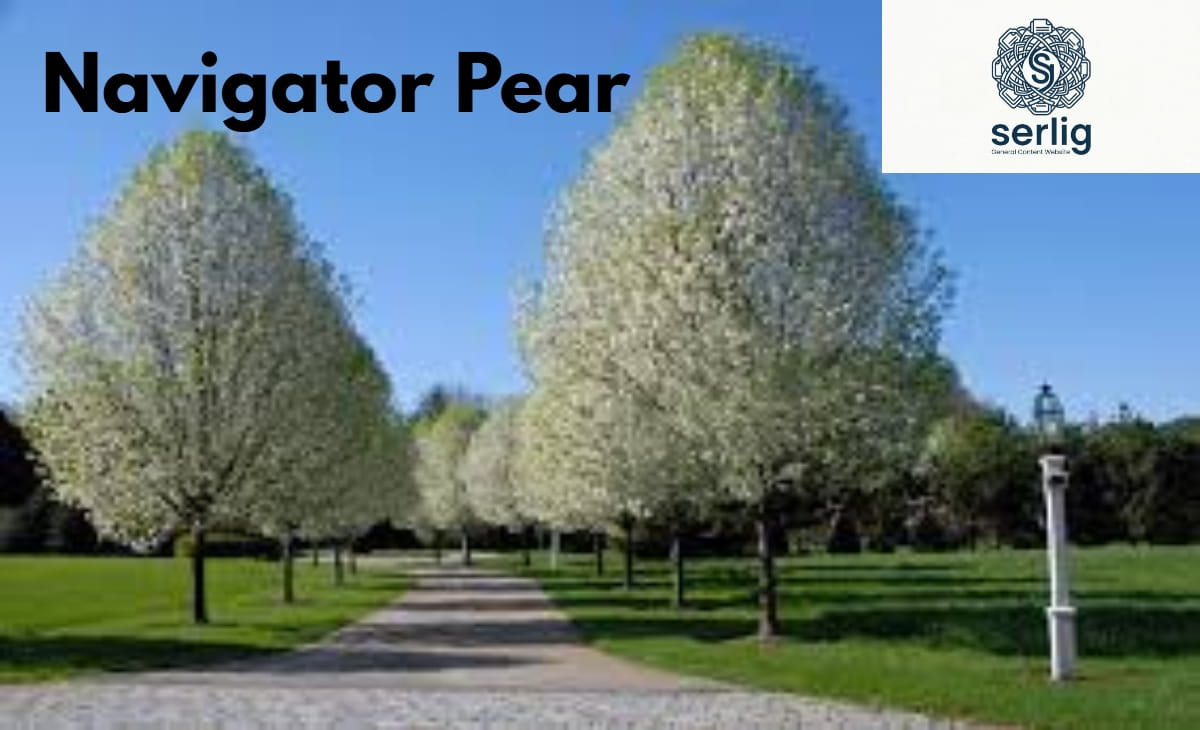
Spring is when it truly dazzles. Bright white blossoms cover every branch before the leaves arrive. The effect is dramatic — almost theatrical. Summer follows with glossy, heart-shaped green leaves that form a dense, cooling canopy. Autumn brings the finest act. The foliage burns through yellow, orange, and deep red. Even in winter, the tree’s bare structural form remains elegant and interesting.
The Fruit-Bearing Navigator Pear
The fruit grows to a medium-to-large size. Its shape is round to slightly elongated. The skin is smooth and semi-glossy. Color ranges from light green to golden yellow. Faint red blushes and russet speckles often develop as the fruit matures.
Inside, the flesh is pale cream-white. It starts firm and juicy. At peak ripeness, it softens to a fine, buttery texture. The flavor balances sweetness with a gentle tang. Most common commercial pears lack this kind of complexity.
Growing Conditions and Care
Sunlight
The Navigator Pear needs full sun. Aim for at least 6 to 8 hours of direct light each day. Less sun means weaker growth. For the fruiting variety, shade reduces sweetness and cuts yields significantly.
Soil
This tree adapts well to many soil types. It prefers well-drained loamy or sandy soil rich in organic matter. Clay soils work too — but only when drainage is adequate. Waterlogged ground is the one condition it cannot handle. Root rot sets in quickly when roots sit in standing water. The ornamental variety tolerates a wide pH range and even compacted urban soils.
Watering
Water consistently for the first two to three years after planting. This helps the root system establish and anchor well. Once mature, the tree becomes drought-tolerant. Deep watering during long dry spells still improves health and performance. It is not strictly required — just beneficial.
Climate and Hardiness
Climate resilience is one of the Navigator Pear’s best qualities. The ornamental variety is hardy down to Zone 2a. It handles extreme cold winters that kill most other ornamental trees. It also tolerates urban heat, air pollution, and strong winds.
The fruiting variety performs well across a wide range of temperate climates. It extends the zone where quality pear growing is practical.
Pollination
The fruiting Navigator Pear needs a cross-pollination partner. Plant a compatible European pear — such as Bartlett or Bosc — within 50 feet. Without a pollinator nearby, fruit set stays minimal. This is true even in a healthy, well-maintained tree.
Pruning and Maintenance
Prune during the dormant winter season each year. Remove crossing or crowded branches. Encourage strong fruiting wood. The Navigator Pear’s natural branch structure is already superior to most ornamental pears. Light annual maintenance is enough to keep it in excellent shape for decades.
Nutritional Value
The Navigator Pear is more than a beautiful tree. The fruit packs an impressive nutritional profile.
One medium pear contains roughly 100 calories. It is light, filling, and genuinely good for you. Here are the key nutrients:
| Nutrient | Benefit |
| Dietary Fiber | Supports digestion, prevents constipation, promotes fullness |
| Vitamin C | Boosts immunity, supports skin health and wound healing |
| Potassium | Regulates blood pressure and supports heart function |
| Copper | Aids immune health, cholesterol metabolism, nerve function |
| Folate & Niacin | Fuel cellular energy production and metabolism |
| Antioxidants | Fight oxidative stress and reduce chronic disease risk |
The Navigator Pear also has a low glycemic index. Its natural sugars enter the bloodstream slowly. This makes it a smart choice for anyone managing blood sugar or following a low-GI eating plan.
Health Benefits
Eating Navigator Pears regularly — as part of a balanced diet — supports several areas of health.
Digestive Health: High fiber content keeps bowel function regular. Soluble fiber feeds beneficial gut bacteria and supports a healthy microbiome.
Heart Health: Potassium and antioxidants reduce blood pressure and lower cardiovascular disease risk factors. Fiber helps manage cholesterol too.
Immune Support: Vitamin C strengthens the immune system. It helps the body fight off and recover from common illnesses faster.
Weight Management: Low calories, high water content, and fiber-driven fullness make Navigator Pears ideal for weight-conscious eaters. You feel satisfied without overeating.
Anti-Inflammatory Properties: Antioxidants and phytonutrients combat chronic low-grade inflammation. This type of inflammation drives many modern diseases.
Culinary Uses
The Navigator Pear’s firm texture and sweet-tart balance make it versatile in the kitchen. It works raw and cooked. Most other pear varieties cannot match this flexibility.
Fresh Eating: Wash it and eat it straight. It delivers satisfying crunch and clean sweetness. Pair it with sharp cheese — aged cheddar or gorgonzola work beautifully.
Salads: Slice or dice it into green salads and grain bowls. It adds color, sweetness, and texture. Walnuts, arugula, candied pecans, and a light vinaigrette complement it well.
Baking and Cooking: The firm flesh holds its shape during cooking. Use it in tarts, crumbles, cakes, and poached pear desserts. Cinnamon, cardamom, and ginger all pair naturally with it.
Preserving: High juice content and firm texture make it excellent for jams, chutneys, fruit butters, and pickled pears. These are great ways to use a large autumn harvest.
Juicing and Smoothies: Its juice is naturally sweet and clean. Blend it with ginger, lemon, apple, and leafy greens for a refreshing drink.
Environmental and Landscape Value
The Navigator Pear benefits more than just the individual garden. It contributes to the wider environment too.
The ornamental variety’s white spring flowers provide early-season nectar for bees and other pollinators. Food sources are scarce at that time of year. The dense summer canopy reduces the urban heat island effect. This matters in cities, where hard surfaces trap heat.
Compared to older ornamental pear cultivars, the Navigator Pear carries far less risk of limb failure in storms. Better branch structure means lower maintenance costs and improved public safety. Its tolerance for pollution and compacted soil makes it one of the most ecologically resilient urban trees available.
Navigator Pear vs. Other Pear Varieties
Set the Navigator Pear beside common varieties — Bartlett, Bosc, Anjou, Bradford — and it holds its own on every count.
It outperforms the Bradford Pear in structural strength and storm resistance. It matches or beats the Bartlett in flavor while offering better disease resistance. Its wide climate adaptability gives it a broader growing range than most traditional European pear cultivars.
For ornamental use, no other pear delivers beauty across all four seasons as consistently. Spring blossoms, summer foliage, autumn fire, and elegant winter form: the Navigator Pear ticks every box.
Conclusion
The Navigator Pear earns its name every season of the year. It navigates tough soils, cold winters, urban pollution, and disease pressure — and still produces outstanding results.
Plant the ornamental variety for a four-season landscape showpiece. Grow the fruiting variety for a reliable, nutritious harvest that works equally well fresh, cooked, or preserved. Either way, this cultivar delivers more value than its current reputation suggests.
For home gardeners, orchardists, urban planners, and health-conscious food lovers, the Navigator Pear is a smart, rewarding, long-term investment. It is beautiful, practical, and genuinely good for you. Few plants can say all three.
For more insights, read this related post: I Tried 12 Restaurants to Find the Best Pollo al Chilindron Near Me here’s What I Discovered
FAQs
Is the Navigator Pear the same as the Bradford Pear?
No. The Navigator Pear is a separate and improved cultivar. Breeders developed it specifically to fix the Bradford Pear’s biggest flaw — weak branch structure that causes limb failure in storms. The Navigator has a stronger, narrower canopy and is far safer and more durable for long-term planting.
Can I grow a Navigator Pear in a small garden?
Yes. The Navigator Pear is an excellent choice for smaller spaces. Its upright, pyramidal shape stays narrow — typically 3 to 4 meters wide at maturity. It works well in courtyard gardens, narrow borders, and even street-side plantings where space is limited.
Does the Navigator Pear produce fruit you can eat?
The ornamental variety (Pyrus calleryana ‘Navigator’) rarely produces edible fruit. The fruit-bearing Navigator Pear (Pyrus communis ‘Navigator’) is the variety grown for eating. Both share the Navigator name but serve different purposes.
What do Navigator Pears taste like?
The fruit delivers a balanced flavor — sweet with a gentle tangy edge. The texture is firm and juicy when freshly picked. It softens to a fine, buttery consistency at peak ripeness. The taste is more complex and nuanced than most common supermarket pear varieties.
How long does it take for a Navigator Pear tree to produce fruit?
Most Navigator Pear trees begin producing fruit within 3 to 6 years of planting, depending on the rootstock and growing conditions. Trees grown from bare-root stock and planted in full sun with a nearby pollinator tend to reach bearing age on the faster end of that range.