Best Piononos de Santa Fe Near Me: Granada’s 127-Year-Old Secret Pastry found, Tasted & Rated
If you have ever typed “best piononos de Santa Fe near me” into a search bar, you already know one thing: you are not looking for just a snack. You want an experience. A tiny cylinder of sponge cake, soaked in syrup, wrapped around warm cinnamon cream, and crowned with a golden toasted cap — that is what a real pionono delivers. It carries nearly two centuries of history in every bite.
The good news? Authentic piononos are easier to find around the world than ever before. With the right knowledge, you will know exactly what to look for — and what to walk away from.
This guide covers the full story: origin, anatomy, quality markers, where to search, and how to eat them properly.
Quick Facts Table
| Feature | Detail |
| Origin | Santa Fe, Granada, Andalusia, Spain |
| Created By | Ceferino Isla González |
| Year Created | 1897 |
| Named After | Pope Pius IX (“Pio Nono”) |
| Shape | Small cylinder with caramelized crown |
| Traditional Filling | Yema (egg yolk cream) + cinnamon |
| Best Paired With | Café solo (espresso) or café con leche |
| Famous Bakery | Casa Isla, Santa Fe, Granada |
| Daily Production (Casa Isla) | 4,000–5,000 piononos |
| Eating Tradition | One single bite |
What Are Piononos de Santa Fe?
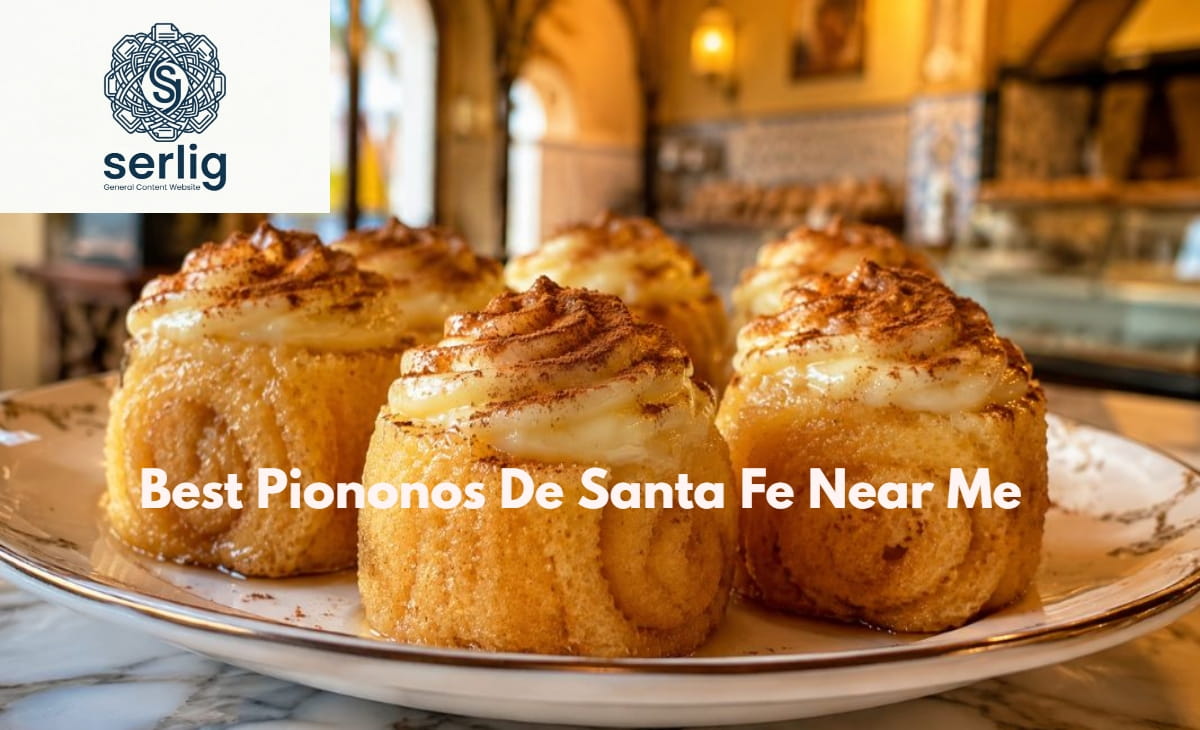
Piononos de Santa Fe are small, cylindrical Spanish pastries. Bakers make them from thin sponge cake, soak it in sweet syrup, roll it around a filling of egg yolk cream and cinnamon, and finish it with a lightly caramelized cream cap on top. They are bite-sized, elegant, and deeply satisfying.
The phrase “de Santa Fe” means “from Santa Fe.” This refers to a small town just 15 minutes outside Granada in Andalusia, southern Spain. Rolled sponge cakes appear in many culinary traditions worldwide. But the pionono from Santa Fe has a very specific identity: small, balanced in sweetness, and defined by its toasted yema crown.
Spanish vs. Argentine Pionono — Know the Difference
In Latin America — especially Argentina — a different version of the pionono exists. Argentine bakers make a larger rolled cake, usually filled with dulce de leche, whipped cream, or fruit preserves. Both desserts share a name and a basic concept. But they taste and look quite different.
When most people search for “piononos de Santa Fe,” they want either the original Spanish version or a local bakery’s take on it. Knowing the difference helps you ask the right questions at any counter.
The History Behind the Name
The story of piononos de Santa Fe runs as deep as the pastry itself.
Ceferino Isla and Pope Pius IX
A local baker named Ceferino Isla González created the pionono in 1897. He built the pastry to honor Pope Pius IX — known in Italian as “Pio Nono” — on the 50th anniversary of the Pope’s ordination. The name “pionono” comes directly from “Pio Nono.” The shape — small, rounded, crowned — was designed to echo the papal mitre, or perhaps the Pope’s solideo, the small skullcap worn by Catholic clergy.
Ancient Arab Roots
Some historians trace the pionono back further — to Hispanic-Muslim Spain in the 10th and 11th centuries. Confectionery from that era used cinnamon and honey heavily. Both remain key ingredients in the traditional recipe today. According to this theory, the people of Santa Fe preserved those ancient cake recipes as part of their Arab culinary heritage. Ceferino Isla later formalized and popularized the version we now know.
Casa Isla: The Living Legacy
By the late 19th century, the pionono had become a beloved symbol of Andalusian baking. The Isla family’s bakery — now called Casa Isla — has kept the original recipe alive through five generations. It produces between 4,000 and 5,000 piononos every single day and distributes them across its cafés in Granada. Santa Fe even has a monument dedicated to the pionono. That tells you everything about how much this little pastry means to the town.
What Makes a Pionono “Authentic”?
Not every rolled cake deserves the name. A genuine pionono de Santa Fe stands apart from generic imitations on five specific points.
1. The Sponge Cake
A true pionono starts with a thin, supple sponge cake. It must be soft enough to roll without cracking, yet structured enough to hold its shape. It should feel almost weightless. Press it gently and it springs back. If it feels dense or dry, walk away.
2. The Syrup Soak
After baking, the baker brushes or soaks the sponge in sweet syrup — usually sugar, water, and sometimes a hint of citrus or cinnamon. This creates the characteristic moistness. The balance matters: moist throughout, but never soggy.
3. The Yema Filling
Traditional piononos use yema — a rich cream from egg yolks, sugar, and cinnamon. It is smooth, slightly dense, and warmly spiced. It should lift the sponge, not overpower it. Cheap versions use low-quality cream or excess sugar. You will taste the difference immediately.
4. The Caramelized Top
The caramelized crown is the pionono’s signature. After assembly, bakers coat the top with egg cream and caramelize it — traditionally with a hot iron, today often with a blowtorch. This creates a thin, slightly crisp surface that contrasts with the soft interior. If the top looks pale or soggy, the bakery skipped this step.
5. The Size
Authentic piononos are genuinely bite-sized. Tradition says you eat one in a single bite. If you see a “pionono” the size of a cupcake, it has strayed far from the original.
Where to Search for Piononos de Santa Fe Near You
Finding authentic piononos outside Granada takes strategy. Here is how to do it right.
Spanish and European Specialty Bakeries
Start here. Bakeries that specialize in Spanish or Andalusian pastries understand the recipe, source proper ingredients, and care about the final result. Search for “Spanish bakery near me,” “Andalusian pastries near me,” or “Granada sweets.” These terms return better results than the pastry name alone.
Gourmet Food Markets
Specialty food markets — especially those serving European or Latin American communities — often stock imported Spanish pastries. Some partner with local artisan bakers who make piononos fresh. You also get to inspect the product before buying, which matters for freshness.
Latin American Bakeries
In cities with large Argentine, Uruguayan, or Chilean communities, Latin American bakeries regularly produce their own piononos. The Argentine version differs from the Spanish original. But skilled bakeries in these communities bring excellent technique and quality ingredients. If the Spanish version is unavailable near you, a well-made Argentine pionono from a reputable shop is worth trying.
Cafés with Spanish or Mediterranean Menus
Some Spanish and Mediterranean cafés serve piononos alongside coffee — the traditional Granada pairing. This setting is actually ideal. You get the pastry in context: slow, leisurely, with the right drink.
Online Reviews and Photos
Before you visit any bakery, check their reviews and photos. A real pionono has a recognizable look: small, cylindrical, with a distinct toasted top. If what they sell under that name looks like a large cream roll or a cupcake, it is not the traditional Santa Fe version.
Call Ahead
This step saves real time. Call the bakery, describe what you want, and ask when they make them. Same-day piononos taste dramatically better than day-old ones. Any good bakery will tell you their production schedule without hesitation.
How to Evaluate Quality Before You Buy
When you arrive, a few quick observations reveal a lot.
Check the shape. Cylinders should be neat, uniform, and compact. Loose or uneven rolls suggest dry sponge or rushed assembly. The toasted top should be evenly golden — not pale, not burnt.
Look at the display. Piononos need cool storage. A bakery leaving them at room temperature for hours is compromising quality. Ask when they were made. “This morning” is the right answer.
Consider the price. Quality ingredients — fresh eggs, real dairy, proper sponge — cost money. Very cheap piononos usually mean shortcuts. Premium prices do not guarantee excellence. But suspiciously low prices almost always signal a problem.
How to Eat a Pionono the Right Way
Tradition is clear: eat it in one bite. The whole experience — soft sponge, sweet cream, caramelized top — works together when you get it all at once. Eating in stages breaks the balance the baker built.
In practice, larger versions make one bite difficult. No shame in two bites. But if you find a small, classically sized pionono from a good bakery, honor the tradition. Pop it in whole. Let it dissolve.
The Perfect Pairing
In Granada, people always eat piononos with coffee. A café solo (espresso) or café con leche works best. The bitterness cuts through the sweetness. The warmth softens the caramelized top just enough. Cinnamon or orange-spiced tea also works well — it echoes the flavors inside the pastry.
Serving from the Fridge
If you buy piononos to take home, let them sit at room temperature for 10 to 15 minutes before eating. Cold storage firms the sponge and stiffens the cream. A short rest restores the intended texture completely.
Modern Variations Worth Trying
The classic recipe stands above all others. But creative bakers have developed worthwhile variations.
Chocolate Piononos: Dark chocolate ganache replaces or joins the yema filling. Popular in contemporary Spanish pastry shops and excellent with espresso.
Coffee-Infused Piononos: Coffee syrup soaks the sponge, adding a mocha undertone. The filling sometimes carries a hint of espresso too.
Dulce de Leche Piononos: The Argentine version. Rich, caramelized milk cream replaces the egg yolk filling. Sweeter and denser than the Spanish original, but with a devoted following.
Fruit Variations: Strawberry, apricot, or citrus curd fillings layered with cream. Lighter and refreshing — especially popular in summer.
Matcha Piononos: The most surprising variation. Japanese bakers adapted the pionono with matcha-flavored cream. It has found genuine popularity in Japan, where European confectionery traditions are deeply respected.
Piononos as a Cultural Experience
Eating a pionono for the first time is a small act of cultural connection. These pastries came from a specific town, at a specific moment in history, from a baker who wanted to honor something meaningful. That story lives in every bite — in the cinnamon that echoes Arab culinary heritage, in the egg yolk cream that belongs to Andalusian tradition, in the caramelized crown once designed to resemble a pope’s headdress.
In Santa Fe, piononos are more than a dessert. They form part of the town’s civic identity. After its role in the 1492 Capitulations of Santa Fe — the agreement that funded Columbus’s voyage — the pionono is the town’s most recognizable cultural symbol. Locals bring boxes as gifts. Visitors make special trips just to eat one at Casa Isla. A public monument honors the pastry.
When you find a good pionono near you, you participate in something that spans continents and centuries. That is extraordinary for something you eat in a single bite.
Conclusion
The search for the best piononos de Santa Fe near you is more than a dessert quest. It is a reach toward a tradition that survived more than 125 years and traveled far from its Andalusian origins to appear in bakeries around the world.
To find the best ones, start with Spanish or Latin American specialty bakeries. Always ask about freshness. Look for the signature cylindrical shape and evenly toasted golden top. Try the classic version before exploring variations. Pair it with coffee. And eat it in one bite.
A good pionono rewards your effort instantly. It is soft, sweet, lightly spiced, and finished with a caramelized crown that no other pastry quite replicates. Find one. Eat it properly. Then find another.
Here’s another article you might find valuable: Toastul: The Complete Guide to the Toast Trend Taking Over Modern Food Culture
Frequently Asked Questions
What exactly is a pionono de Santa Fe?
A pionono de Santa Fe is a small cylindrical Spanish pastry from Santa Fe, Granada. Bakers roll thin sponge cake around a cinnamon egg yolk cream filling, soak it in sweet syrup, and finish it with a caramelized cream top. It is bite-sized, traditionally eaten in one single mouthful.
How is a Spanish pionono different from an Argentine pionono?
The Spanish pionono from Santa Fe, Granada is small, filled with yema (egg yolk cream) and cinnamon, and topped with a caramelized crown. The Argentine pionono is larger, softer, and typically filled with dulce de leche or whipped cream. Both share a name, but the taste, size, and filling differ significantly.
Where can I find authentic piononos de Santa Fe near me?
Search for Spanish specialty bakeries, European pastry shops, or Latin American bakeries in your area. Check Google Maps reviews and photos before visiting. Call ahead to confirm they make piononos fresh daily. Gourmet food markets and Spanish cafés are also worth checking.
How do I know if a pionono is fresh and high quality?
A fresh pionono has a soft, pliable sponge — never dry or crumbly. The top should show an even golden-brown caramelized surface. The roll should look neat and uniform. Ask the bakery when they made them. Same-day piononos taste far better than those made the day before.
What should I drink with piononos de Santa Fe?
The traditional pairing in Granada is espresso (café solo) or café con leche. The coffee’s bitterness balances the sweetness of the pastry perfectly. If you prefer tea, a cinnamon or orange-spiced blend complements the flavors inside the pionono beautifully.