Did Ed Gein Kill Adeline Watkins? The Shocking Truth Behind His Proposal and the Bodies Found in His House
Few names in American criminal history provoke as much dread as Ed Gein. Known as the “Butcher of Plainfield,” Gein terrorized the small town of Plainfield, Wisconsin, in the 1940s and 1950s — not only through murder, but through a grotesque catalogue of grave-robbing and body-part harvesting that shocked the nation in 1957. Decades later, Netflix’s Monster: The Ed Gein Story brought an often-overlooked figure back into public conversation: Adeline Watkins, the local woman who claimed to have been Gein’s girlfriend for twenty years. One of the most searched questions surrounding this story is simple on its surface: Did Ed Gein kill Adeline Watkins?
The short answer is no. Gein never harmed Watkins. She survived his arrest, lived quietly for decades, and died in 1992 at age 85. The longer answer, however, touches on complicity, manipulation, unreliable memory, and what it truly means to “know” someone capable of monstrous things.
QUICK FACTS: Ed Gein & Adeline Watkins
| Detail | Fact |
| Ed Gein’s full name | Edward Theodore Gein |
| Born | August 27, 1906 — La Crosse, Wisconsin |
| Died | July 26, 1984 — aged 77 |
| Nickname | The Butcher of Plainfield |
| Confirmed victims | Mary Hogan (1954), Bernice Worden (1957) |
| Adeline Watkins born | 1907 — Plainfield, Wisconsin |
| Adeline Watkins died | 1992 — aged 85 |
| Did Gein kill Watkins? | No |
| Alleged relationship | Claimed 20-year romance; later denied by Watkins |
| Marriage proposal? | Watkins said yes — in February 1955; she refused |
| Gein’s legal outcome | Not guilty by reason of insanity (1968) |
| Netflix portrayal | Monster: The Ed Gein Story (2025); Watkins played by Suzanna Son |
Who Was Ed Gein?
Edward Theodore Gein was born on August 27, 1906, in La Crosse, Wisconsin. His mother, Augusta Gein, was a fanatically religious woman. She preached relentlessly about the sinfulness of women and carnal desire. Augusta moved the family to a rural farm outside Plainfield around 1915, and Ed rarely left. His world revolved almost entirely around her.
Augusta died in 1945. Her death devastated Ed completely. He boarded up her rooms and preserved them like a shrine. A slow psychological unraveling followed. Gein grew obsessed with death, femininity, and human anatomy. He consumed pulp crime magazines, anatomy textbooks, and Nazi medical experiment accounts. Soon he began visiting local cemeteries, exhuming corpses, and harvesting skin and bones to fashion masks, vests, bowls, lampshades, and furniture. He wore a “woman suit” made of human skin around his darkened farmhouse.
His confirmed murders included two victims:
- Mary Hogan — a 54-year-old tavern owner who vanished in December 1954
- Bernice Worden — a 58-year-old hardware store owner, murdered on November 16, 1957
Both women physically resembled his mother. Gein shot both of them. When police searched his farmhouse after Worden disappeared, they found a nightmare: her decapitated, eviscerated body hung by her heels in a shed. Inside the house, they found skulls, organs, and human-skin artifacts scattered everywhere. Gein later confessed to both killings. Adeline Watkins, however, was never among his victims.
Who Was Adeline Watkins?
Adeline Watkins was born in 1907. She spent nearly her entire life in Plainfield, Wisconsin, sharing a small apartment with her widowed mother. Quiet and largely anonymous, she stayed out of the public eye — until November 1957.
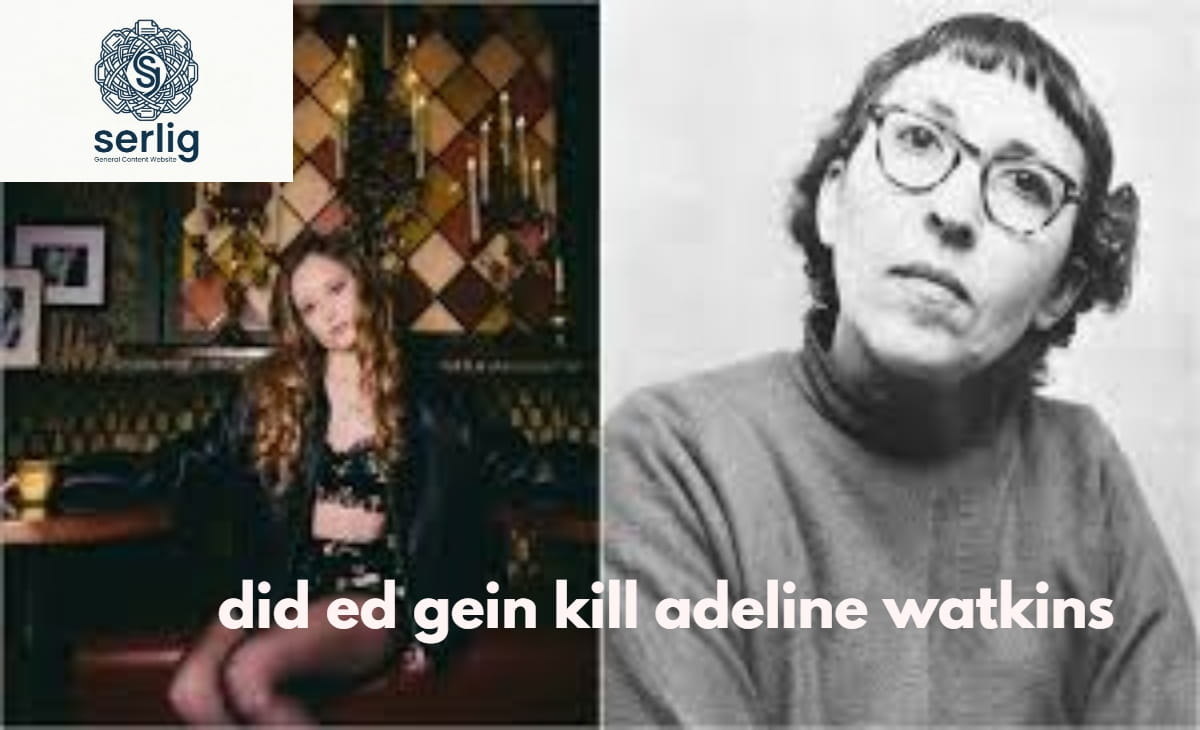
Days after Gein’s arrest, Watkins gave an interview to the Minneapolis Tribune, reprinted in the Wisconsin State Journal on November 21, 1957. Her claim was startling: she and Ed Gein had shared a twenty-year romantic relationship.
She painted him as warm and considerate. Their dates involved movies and occasional tavern visits. Gein rarely drank. Watkins recalled she practically had to drag him into a bar, because he preferred drugstore milkshakes. They also bonded over books and reading. Even Watkins’ mother praised Gein, calling him a “sweet, polite man” who always brought her daughter home by 10 p.m.
Then came the bombshell detail. Gein had proposed marriage to Watkins in February 1955. She turned him down — not from lack of affection, but from self-doubt. “There was something wrong with me,” she told the Tribune. “I was afraid I wouldn’t live up to what he expected.” Her final words in the article cut to the bone: “I loved him and I still do.”
The story exploded across national newspapers. Her photograph appeared on front pages everywhere. Briefly, Adeline Watkins became one of the most talked-about women in America.
The Disturbing Detail Hidden in the Romance
Beneath the wholesome courtship Watkins described lay something deeply unsettling. In that same interview, she casually mentioned that she and Gein regularly talked about murder cases together. “I guess we discussed every murder we ever heard about,” she said. “Eddie told how the murderer did wrong, what mistakes he made. I thought it was interesting.”
This detail deserves more attention than it usually gets. By the time Gein proposed to Watkins in February 1955, he had already murdered Mary Hogan — just two months earlier, in December 1954. He had also robbed graves for years before that. The murder cases he analyzed with Watkins over dates and milkshakes were not mere news stories to him. At least one of them was his own crime.
No evidence suggests Watkins knew any of this. She firmly denied ever setting foot inside his farmhouse. Investigators found nothing to charge her with, and authorities never considered her an accomplice.
Watkins Walks Back Her Story
Almost immediately after her famous interview, Watkins began retreating from it. In a follow-up interview with a local Wisconsin paper, she flatly retracted much of what she had said. She denied any romantic relationship, claiming only a friendship. The Tribune article, she said, was “an exaggeration blown up out of proportion to its importance and containing untrue statements.”
She acknowledged knowing Gein for twenty years — but adjusted the details sharply. He had “called on her for only seven months, and then only intermittently.” No decades-long love story. Just an occasional acquaintance.
Her reversal raised more questions than it answered. Did a journalist misrepresent her words? Did Watkins exaggerate initially, then panic at the attention?, also did fear of legal or social consequences drive her to recant? Nobody outside her own head knew for certain.
One fact stands out clearly: Ed Gein never mentioned Watkins at all. Not in confessions. Not in statements, also not in psychiatric evaluations. No independent record from Gein’s side corroborates a romantic relationship.
After her second interview, Watkins went permanently silent on the subject. She lived out her days in Plainfield and died in 1992 at age 85. Her grave is in her hometown.
Why Do People Ask If Ed Gein Killed Adeline Watkins?
The question gained fresh momentum when Netflix’s Monster: The Ed Gein Story premiered in October 2025. Charlie Hunnam plays Gein; Suzanna Son plays Watkins. The show takes dramatic creative liberties. It depicts Watkins not as a confused small-town woman but as a close confidant who joined Gein on grave-robbing expeditions and actively encouraged his crimes.
That fictional version of Watkins is morally implicated and deeply intertwined with Gein’s activities. Viewers naturally wondered about her fate. Did Gein ultimately turn on her? Did she become one of his victims?
The answer is no. The real Adeline Watkins was never in danger from Gein — at least not in any documented sense. The Netflix portrayal is a fictional embellishment with no support in the historical record.
What Gein’s Victim Pattern Reveals
Gein’s two confirmed victims — Bernice Worden and Mary Hogan — shared one key trait. Both were older women who resembled his domineering mother, Augusta. Investigators and criminal psychologists who examined the case concluded that Gein’s murders stemmed from a pathological fixation on his mother and a deranged attempt to reclaim or replicate her.
Watkins does not match this profile. Beyond that, all available evidence points to Gein’s social relationships with women as distant and emotionally stunted rather than violent. He reportedly admired Mary Hogan from afar for years before killing her. He claimed to have never experienced a sexual relationship in his life. His upbringing under Augusta’s religious tyranny left him emotionally frozen.
A genuine twenty-year romance with Watkins seems improbable — but the true nature of their connection remains permanently unclear. The real answer sits somewhere between her original romantic account and her later denial.
Conclusion
The story of Adeline Watkins and Ed Gein is one of the strangest subplots in American true crime history. She was not his victim, also she was not his accomplice. She may have been his friend, also she may have been nothing at all.
What she certainly was is a woman caught in the gravitational pull of a monster — someone whose brief, confusing public statement tied her name to his forever. An entire community failed to see what Gein truly was. Farmers, neighbors, and local parents trusted him with their children. Nothing in his daily behavior hinted at the horror he carried home each night.
Adeline Watkins may have been deceived. But so was everyone else in Plainfield.
The Butcher of Plainfield claimed two documented lives: Mary Hogan and Bernice Worden. Adeline Watkins was not one of them. She lived, kept quiet, and outlasted the story’s first wave of notoriety — only to have a Netflix drama resurrect and reshape her image decades after her death. That, perhaps, is its own quiet injustice.
Ed Gein received a diagnosis of schizophrenia. In 1968, a court found him not guilty by reason of insanity. He remained in psychiatric institutions until his death on July 26, 1984, at age 77. His crimes directly inspired Psycho (1960), The Texas Chain Saw Massacre (1974), and The Silence of the Lambs (1991).
Explore more by reading this related post: From Rinks to Recluse: The Untold Story of Murray Hone — Evangeline Lilly’s Mystery Ex-Husband
Frequently Asked Questions
Did Ed Gein kill Adeline Watkins?
No. Ed Gein never harmed Adeline Watkins. She lived in Plainfield, Wisconsin, after his 1957 arrest and died of natural causes in 1992 at age 85. Gein’s two confirmed victims were Mary Hogan and Bernice Worden.
Was Adeline Watkins really Ed Gein’s girlfriend?
She claimed so in a 1957 Minneapolis Tribune interview, saying the two had a twenty-year romance. Weeks later, she retracted the claim entirely and said Gein had only called on her intermittently for about seven months. Gein never mentioned her in any statement or confession.
Who plays Adeline Watkins in the Netflix series?
Actress Suzanna Son portrays Adeline Watkins in Netflix’s Monster: The Ed Gein Story (2025), opposite Charlie Hunnam as Ed Gein. The show’s depiction of Watkins as a grave-robbing accomplice is fictional and not supported by historical evidence.
How many people did Ed Gein actually kill?
Gein confessed to two murders: tavern owner Mary Hogan in December 1954 and hardware store owner Bernice Worden in November 1957. Authorities suspected him in other disappearances but found no conclusive evidence. Some also suspect him in his brother Henry’s death, though authorities ruled it an accident.
What happened to Ed Gein in the end?
After his 1957 arrest, Gein received a schizophrenia diagnosis. A court declared him unfit for trial in January 1958. In 1968, after doctors cleared him to stand trial, a jury found him guilty of murdering Bernice Worden — but also declared him legally insane at the time of the crime. Gein spent the rest of his life in Wisconsin psychiatric institutions and died on July 26, 1984, at age 77.