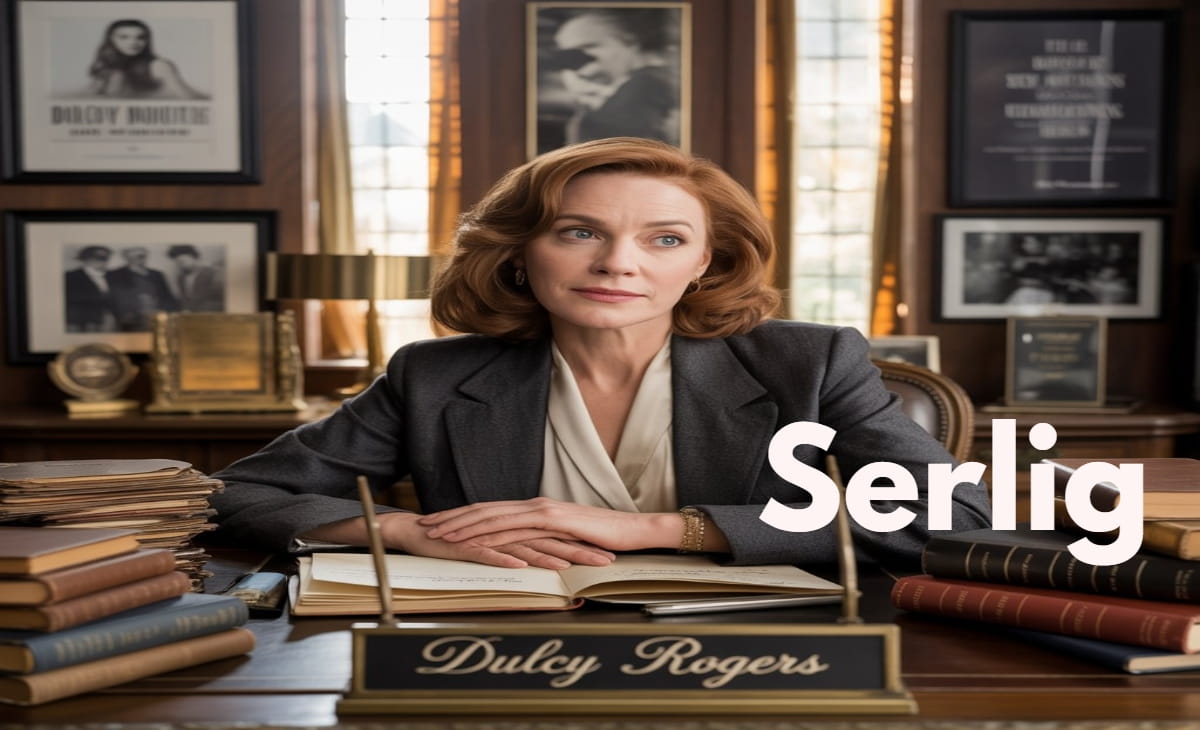
Dulcy Rogers: Actress, Writer, and the Woman Behind Her Own Story
In Hollywood, self-promotion is practically a professional requirement. Dulcy Rogers ignores that rule entirely. She is an actress, playwright, voice artist, and writer who built a real career on her own terms. Many people know her as the wife of actor Diedrich Bader. A closer look, however, reveals a multifaceted creative professional with decades of documented work across film, television, and live theater.
Rogers does not chase the spotlight. She steps into it only when her work demands it. That quiet confidence makes her story worth telling — and worth telling accurately.
Table of Contents
- Introduction
- Early Life and Family Roots in the Arts
- Yale, the Marching Band, and the Move to New York
- Film Career: From Hollywood Comedies to Indie Projects
- Television Work: A Diverse Range of Roles
- Voice Acting: Batman and Beyond
- Theater: The Playwright Takes Center Stage
- Marriage to Diedrich Bader
- A Life Defined by Artistic Integrity and Privacy
- Conclusion
- FAQs
Early Life and Family Roots in the Arts
Dulcy Rogers grew up in a household where storytelling was tradition, not hobby. Her father, David Rogers, was a prominent Broadway playwright and Tony nominee. He wrote the book and lyrics for the 1978 musical Charlie and Algernon, based on the celebrated novel Flowers for Algernon. Beyond theater, he also wrote for television, opera, and night clubs, and authored novels and short stories. David Rogers passed away in June 2013 at the age of 85.
Her mother, June L. Walker Rogers, was a dancer and comedienne. Growing up between these two creative parents gave Dulcy a deep foundation in performance. Interestingly, she did not always plan to follow that path. As a young woman, she wanted to become a geologist. Her father redirected her, persuading her to focus on entertainment and carry the family’s artistic tradition forward. She later said that becoming a performer and writer felt like “preserving the family business.”
That inheritance took root. Dulcy Rogers did not enter show business by riding a relative’s coattails. She arrived with creative DNA and carved out her own identity within the industry.
Yale, the Marching Band, and the Move to New York
Rogers studied at Yale University, one of America’s most prestigious academic institutions. There, she joined the Yale Precision Marching Band — an unusual activity for a future playwright, but one that hints at her broad range of curiosity and engagement. After graduating in 1987, she moved directly to New York City to pursue acting.
Those early years were not glamorous. Auditions led nowhere for a while. Bills got paid through commercials and small bit parts. Still, Rogers kept working on her craft. A turning point came when she landed the role of Laura in a regional repertory production of The Glass Menagerie, Tennessee Williams’ beloved classic. That role gave her credibility as a stage actress and opened doors to further opportunities.
Before all of this, she had started even younger in the theater world. IMDb records that Rogers began her show business connection as the head usher at the Westport Country Playhouse in Connecticut — a storied regional theater. That early connection to live performance clearly never left her. Dulcy Rogers has shown that success in Hollywood does not require following the usual path. She built a real career on her own terms, focusing on meaningful work instead of constant visibility. Her steady commitment to craft has shaped an authentic and lasting career.
Film Career: From Hollywood Comedies to Indie Projects
Rogers moved from stage to screen in the mid-1990s. Her breakthrough film role came in 1995 with Father of the Bride Part II, the sequel to the hugely popular Steve Martin comedy. She played Ava the Beautician, sharing scenes with Martin and Diane Keaton. Working alongside comedy royalty on a major studio production proved she could hold her own in Hollywood.
More film work followed. Certain Guys (1999) added to her screen credits as a drama-comedy. Sunny & Share Love You (2007) rounded out her filmography with another comedy role. Earlier, she appeared in the 1989 film Rude Awakening in a supporting street student character role.
These credits do not place Rogers among Hollywood’s A-listers. What they do show is sustained professional presence across nearly two decades of film work — a track record built on consistent effort, not a single lucky break.
Television Work: A Diverse Range of Roles
Rogers built an impressive television résumé across some of the most recognized American sitcoms. Her guest credits include Frasier, arguably one of the finest sitcoms of the 1990s, and Wings, a beloved ensemble comedy. Both shows were at the peak of their popularity during her appearances.
She also appeared on The Drew Carey Show, where her husband Diedrich Bader was a series regular playing Oswald Lee Harvey. Working on the same show as a spouse requires its own kind of professionalism. Rogers managed that without any reported friction. Additional television credits include Complete Savages, a family comedy from the mid-2000s.
Her role on The Caroline Rhea Show is particularly notable. There, she worked as both writer and actress — moving behind the camera as well as in front of it. That dual contribution demonstrates a level of creative engagement beyond simply taking assigned roles. Television writing requires craft, discipline, and industry knowledge. Rogers brought all three.
Voice Acting: Batman and Beyond
Animation is another format Rogers has explored. IMDb credits her with voice roles as Helen and Kiki in a 2011 episode of Batman: The Brave and the Bold. That animated series reimagined the Caped Crusader in a lighter, adventure-driven tone and attracted voice talent from across the industry.
Voice acting demands a specific skill set. Performers must convey character, emotion, and clarity without physical expression. Rogers’ appearance in a Batman property — even in a single episode — reflects her willingness to move across formats and take on new creative challenges.
Theater: The Playwright Takes Center Stage
Of everything in Dulcy Rogers’ career, her theater work reveals the most about her as an artist. She wrote and starred in an original solo play called I Am a Tree, described in promotional materials as “an unstable new comedy.” The story follows a woman named Claire in her thirties who discovers family members she never knew existed. In search of truth about the mother she barely knew, Claire embarks on an odyssey to find these relatives. What she finds instead are three wildly eccentric aunts — each offering a different, conflicting version of her mother’s life.
The play first opened at the Lillian Theatre at Elephant Stages in Los Angeles in June 2010. Bob Koherr directed that run. Audiences packed every performance, and critics responded with enthusiasm. The sold-out Los Angeles run led directly to an Off-Broadway transfer. In May 2012, I Am a Tree opened at St. Clement’s Theatre in New York, directed by Allan Miller. Neil Patel handled set design, and Jason Crystal managed sound.
Writing a play is one achievement. Performing every role solo is another. Taking that play from Los Angeles to Off-Broadway is remarkable. Rogers did all three. The work positions her firmly as a playwright and solo theatrical artist — not simply a performer giving voice to someone else’s words. The themes of I Am a Tree — identity, memory, family, and the search for truth — also carry a personal resonance. As the daughter of artists, Rogers was exploring, through fiction, what it means to understand the people who shaped you.
Marriage to Diedrich Bader
Rogers and Diedrich Bader first crossed paths in 1987 — the year she graduated from Yale. Their relationship developed slowly and steadily. After a decade of dating, they married on May 25, 1997. Nearly thirty years later, they remain together, a rarity by any measure in Hollywood. Two children complete their family: a son named Sebastian, born around 2003, and a daughter named Ondine Caolila, born around 2005.
Bader’s career has been extensive. He played Oswald on The Drew Carey Show, delivered one of cinema’s most beloved minor performances in Office Space, and voiced Batman across multiple animated projects. More recently, he starred in the ABC comedy American Housewife and voiced Bruce Wayne in the animated Harley Quinn series.
Together, the couple appears at public events selectively. Photo archives document them at the Miss Congeniality 2 premiere in 2005, Warner Bros. Animation celebrations in 2009, and Creative Coalition events in more recent years. Each public appearance reflects a partnership that operates on its own quiet terms — present when meaningful, absent from unnecessary noise.
A Life Defined by Artistic Integrity and Privacy
What truly sets Dulcy Rogers apart is her disciplined relationship with public visibility. No verified social media presence exists for her. Few interviews appear in any archive. She does not build a personal brand or perform her private life for an audience. Yet she is not invisible — her work has placed her in front of real audiences in real theaters and on real screens for decades.
Her creative career continues to evolve. IMDb lists an upcoming short film called Maculate under both her acting and writing credits. Television writing credits beyond The Caroline Rhea Show also appear in various sources, suggesting a body of work that still receives less attention than it deserves.
Rogers proves something important: a low-profile life is not the same as an empty one. She chose depth over visibility, substance over celebrity. That choice has defined both her personal life and her creative output.
Conclusion
Dulcy Rogers is more than Diedrich Bader’s wife. She is an actress with credits on major studio films and acclaimed television series, also she is a playwright who wrote, performed, and produced a solo show that traveled from Los Angeles to Off-Broadway. She is a voice actress, a television writer, and a woman who began her career as a head usher at a Connecticut playhouse and ended up performing at St. Clement’s Theatre in New York.
Her story carries no scandal, no manufactured drama, and no social media noise. What it carries instead is something rarer in Hollywood: a genuine artistic life, lived with intention and quiet confidence. Dulcy Rogers built something real — and she did it entirely on her own terms. That is the kind of story that deserves more attention than it usually gets.
FAQs
Who is Dulcy Rogers?
Dulcy Rogers is an American actress, playwright, and writer. She has appeared in films such as Father of the Bride Part II (1995), television shows including Frasier and The Drew Carey Show, and wrote and performed the solo Off-Broadway play I Am a Tree. She is also the wife of actor Diedrich Bader.
What is Dulcy Rogers best known for?
Rogers is best known for her role as Ava the Beautician in Father of the Bride Part II (1995) alongside Steve Martin and Diane Keaton. In theater, her most celebrated work is the solo play I Am a Tree, which sold out in Los Angeles before moving to Off-Broadway in 2012.
Who are Dulcy Rogers’ parents?
Her father was David Rogers, a Tony-nominated Broadway playwright who wrote the 1978 musical Charlie and Algernon. Her mother, June L. Walker Rogers, was a dancer and comedienne. Both parents had professional careers in the arts, which strongly influenced Dulcy’s own path.
How long have Dulcy Rogers and Diedrich Bader been married?
Rogers and Bader married on May 25, 1997, after dating for approximately a decade. As of 2025, they have been married for nearly three decades. They have two children together: a son named Sebastian and a daughter named Ondine Caolila.
Does Dulcy Rogers have social media accounts?
No verified public social media account exists for Dulcy Rogers. She maintains a notably private public profile. She does not appear to use Instagram, Twitter/X, or Facebook in any public-facing capacity. Her presence is documented through industry databases like IMDb, theater listings, and press photo archives.