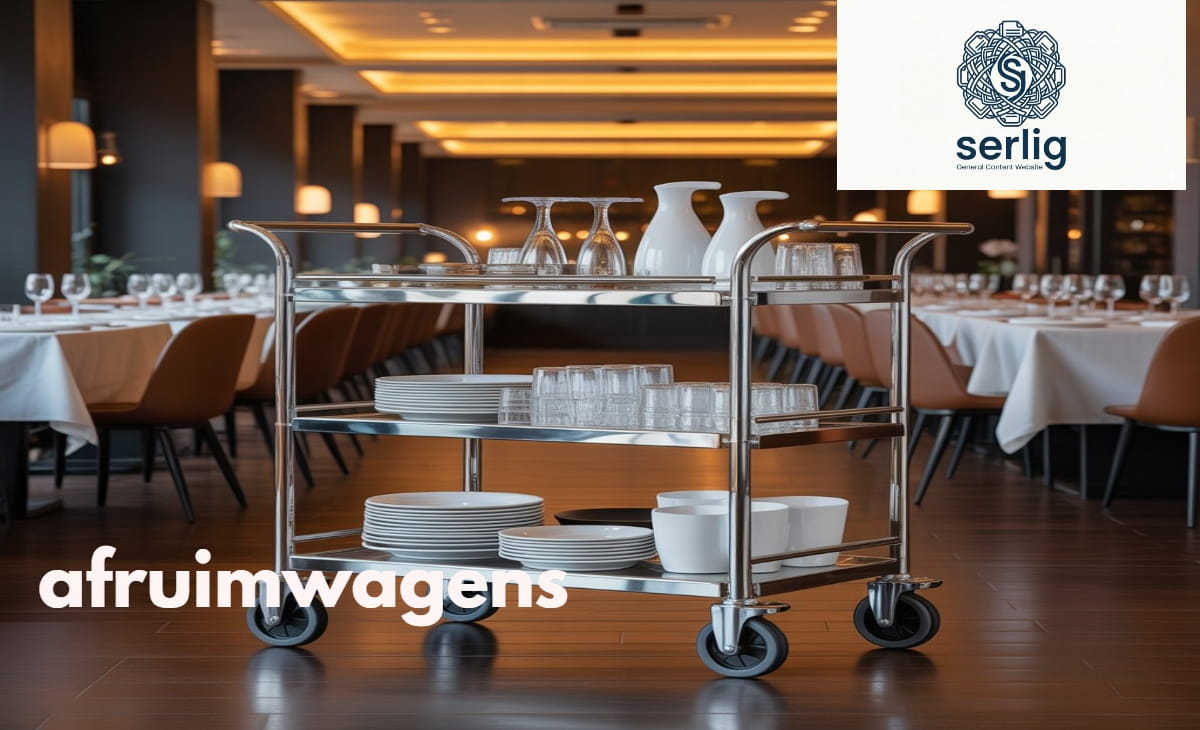
Afruimwagens: The Indispensable Tool in Professional Hospitality
In any fast-paced hospitality environment, time is money. Whether it is a fully booked restaurant during the Friday dinner rush, a corporate canteen serving hundreds of employees, or a catering company managing a large outdoor event — the ability to clear tables quickly and hygienically is not a luxury. It is a necessity. And at the heart of that process sits one essential piece of equipment: the afruimwagens.
Translated literally from Dutch, “afruimwagens” means “clearing trolley” or “bussing trolley.” It is a wheeled cart specifically designed to collect and transport dirty crockery, glassware, cutlery, trays, and waste from dining areas to the dishwashing zone. Though the term originates in the Netherlands and Belgium, the concept is universally recognised in the global hospitality industry.
In this article, we explore everything you need to know about afruimwagens — what they are, why they matter, which types exist, how to choose the right one, and how to keep them in top condition for years of reliable use.
What Is an Afruimwagen?
An afruimwagen — also referred to as a débarasseur trolley, clearing cart, bussing trolley, or dish return cart — is a mobile, multi-shelf unit designed to make the process of clearing and transporting tableware as efficient as possible. Instead of making repeated individual trips from the dining room to the kitchen, staff can load an entire section’s worth of dishes, glasses, and leftovers onto a single trolley and transport everything in one smooth journey.
These trolleys are widely used across a broad range of environments: restaurants, cafés, hotels, hospital wards, nursing homes, school canteens, corporate dining facilities, congress centres, catering companies, and self-service buffet restaurants.
Why Afruimwagens Are Essential
The benefits of using a quality afruimwagen go far beyond simple convenience. Here is why they are considered indispensable in professional hospitality:
Efficiency and Speed: Without a clearing trolley, staff must carry items by hand — a slow, repetitive, and physically demanding process. An afruimwagen allows a single employee to clear multiple tables in one go, dramatically reducing the time between a guest leaving and the table being ready for the next booking.
Reduced Physical Strain: Carrying heavy stacks of plates and glasses repeatedly throughout a shift puts enormous strain on the back, shoulders, and wrists. A clearing trolley reduces this physical load, lowering the risk of workplace injury and improving staff wellbeing over time.
Improved Hygiene: Afruimwagens support HACCP compliance — the internationally recognised food safety management system. By keeping dirty crockery contained and separated from clean items during transport, clearing trolleys help prevent cross-contamination and maintain high hygiene standards throughout the kitchen workflow.
Professional Presentation: A neatly used clearing trolley contributes to a cleaner, more organised dining room. Tables are turned over faster, the floor remains clear of obstacles, and guests experience a more polished, professional service environment.
Types of Afruimwagens
The market offers a wide variety of clearing trolley designs, each suited to different operational needs. Understanding the differences helps you make a smarter purchasing decision.
1. Standard Clearing Trolley
The most basic design features a lightweight frame on swivel wheels with two or three flat shelves. These are ideal for smaller hospitality venues with moderate volumes of tableware. They are compact, affordable, and straightforward to use.
2. Clearing Trolley with Waste Bin
For settings where significant amounts of food waste are generated — buffet restaurants, fast-food cafeterias, school canteens — a clearing trolley with an integrated waste bin is the logical choice. These models include a dedicated compartment for a waste container of 20 to 30 litres alongside the standard shelving. Some models offer two separate bins, making it easy to separate organic waste from recyclables at the point of clearing.
3. Tray Return Trolley (Regaalwagen)
These units feature multiple vertical slots or rails that allow trays to slide in safely without stacking on top of each other. A 16-level model, for example, can hold up to 16 trays simultaneously — making them especially valuable in hospital cafeterias, university canteens, and airline catering operations.
4. All-In Clearing Trolley
The most comprehensive option on the market, all-in clearing trolleys integrate multiple functions into a single unit: shelves for plates and glasses, cutlery holders, a waste container, and sometimes enclosed side panels for added protection during transport. Some heavy-duty all-in models have a total load capacity of up to 200 kilograms, making them suitable for the most demanding hospitality environments.
5. Combination Trolley
A combination trolley is a versatile, multi-purpose design that can function both as a clearing trolley and a laying trolley (for setting tables). Models such as the RHIMA COT-110 are built with adjustable rail systems, optional plate racks, tray holders, and cutlery compartments — giving hospitality operators maximum flexibility from a single piece of equipment.
Materials: Stainless Steel vs. Polypropylene
The two dominant materials used in the construction of afruimwagens are stainless steel (RVS) and polypropylene (plastic). Each has its own advantages.
Stainless Steel (RVS)
Stainless steel is the gold standard for professional hospitality equipment, and for good reason. It is resistant to corrosion and bacterial growth, easy to clean and disinfect, and exceptionally durable under heavy daily use.
For most professional applications, stainless steel is the recommended choice. Look for AISI 304 grade for standard indoor use, or AISI 316 for environments exposed to more aggressive cleaning agents or salt air.
Polypropylene (Plastic)
Polypropylene clearing trolleys are lighter than their stainless steel counterparts, making them easier to manoeuvre — particularly useful for staff who need to navigate narrow corridors or work across multiple floors. They are also resistant to moisture and most common cleaning chemicals. While not as robust as RVS models, plastic trolleys are a practical and cost-effective option for lighter-duty operations.
Wheels, Mobility, and Load Capacity
A clearing trolley is only as good as its mobility. The best afruimwagens are fitted with ball-bearing swivel castors — typically 75 mm to 125 mm in diameter — that roll smoothly across tile, vinyl, and low-pile carpet. At least two of the wheels should be fitted with locking brakes to prevent the trolley from rolling away while being loaded.
When choosing a model, also consider load capacity. Standard trolleys handle 50 to 100 kg per shelf, while heavy-duty all-in models can support up to 200 kg total. Always match the trolley’s capacity to your actual operational needs — overloading causes premature wear and creates safety risks.
Key Accessories
Many afruimwagens can be enhanced with optional accessories that increase their functionality:
- Cutlery holders and inserts — keep forks, knives, and spoons sorted during collection
- Plate racks — upright slots that hold plates securely on edge, reducing breakage
- Waste containers — integrated or clip-on bins for food scraps and disposables
- Drip trays — catch liquid spills before they reach the floor
- Bumper rails — protect the trolley and surrounding walls or furniture from collision damage
- Tray holders — dedicated rails or racks for meal trays in cafeteria settings
Cleaning and Maintenance
Proper maintenance extends the lifespan of any afruimwagen significantly. For stainless steel models, clean the surfaces daily with a soft damp cloth and a mild detergent. Avoid abrasive scouring pads, steel wool, or alkaline cleaning agents — these can scratch the surface and compromise the protective oxide layer that gives RVS its corrosion resistance.
For periodic deep cleaning, use a professional RVS cleaner or polish, which removes stubborn stains while leaving behind a thin protective film. Pay special attention to the wheel castors: clear them regularly of food debris and check that they rotate freely. Well-maintained wheels not only last longer but also make the trolley far easier and quieter to push across a busy dining room floor.
Buying Guide: What to Look for
Before investing in an afruimwagen, consider the following key factors:
- Usage environment — Is this for a small café, a large hospital, or a catering company? Match the trolley type to the setting.
- Volume — How many covers do you serve per day? Higher volume requires higher capacity.
- Dimensions — Always measure doorways, corridors, and lift openings before buying. A trolley that does not fit through the kitchen door is useless.
- Material — RVS for heavy professional use; polypropylene for lighter applications.
- Waste management needs — Do you need integrated waste separation? Choose an appropriate model.
- Brand and build quality — Trusted brands include Bartscher, Combisteel, RHIMA, Diamond, Saro, and Vogue, all of which manufacture to professional hospitality standards.
- Budget — Quality trolleys range from a few hundred to over a thousand euros. A cheap model that breaks down quickly costs more in the long run.
Buying vs. Renting
For businesses that only occasionally host large-scale events, renting an afruimwagen from a hospitality equipment hire company is a cost-effective alternative to purchasing. Hire companies offer daily or weekend rates and typically include delivery and collection. However, for businesses that use clearing trolleys on a daily basis, purchasing is almost always the more economical long-term solution.
Frequently Asked Questions
What is an afruimwagen used for?
An afruimwagen is a professional clearing trolley used in the hospitality industry to collect dirty dishes, glassware, cutlery, trays, and food waste from dining tables and transport them to the dishwashing area. It is widely used in restaurants, hotels, hospitals, canteens, and catering operations to improve efficiency and hygiene.
What is the best material for an afruimwagen — stainless steel or plastic?
For intensive professional use, stainless steel (RVS) is the better choice. It is more durable, easier to sanitise, and more resistant to the demands of a commercial kitchen environment. Polypropylene (plastic) trolleys are a good option for lighter-duty use, where weight and manoeuvrability are the primary concerns.
How do I clean and maintain an afruimwagen?
Clean stainless steel clearing trolleys daily with a soft damp cloth and mild detergent. Avoid abrasive cleaners and steel wool. For deeper cleaning, use a dedicated RVS cleaner or polish. Regularly inspect and clear the wheel castors to keep them rolling smoothly. A consistent cleaning routine significantly extends the trolley’s lifespan.
How do I choose the right size afruimwagen for my business?
Consider the number of covers you serve daily, the dimensions of your corridors and doorways, and the type of tableware you use. Also check whether the trolley’s shelf dimensions are compatible with standard Gastronorm (GN) containers and dishwasher racks used in your kitchen. Always measure your space before purchasing.
Can I rent an afruimwagen instead of buying one?
Yes. Many hospitality equipment hire companies offer afruimwagens for short-term rental — ideal for events, festivals, or seasonal peaks. However, if your business uses clearing trolleys on a daily basis, purchasing is the more cost-effective solution in the long run. Compare the total cost of ownership against rental fees over 12 months to make the right decision for your operation.
For more insights, read this related post: Toastul: The Complete Guide to the Toast Trend Taking Over Modern Food Culture
Conclusion
An afruimwagen is far more than a simple cart. It is a purpose-engineered tool that directly impacts the efficiency, hygiene, safety, and professionalism of any hospitality operation. From a small neighbourhood café to a large congress centre or hospital canteen, the right clearing trolley pays for itself many times over through faster table turns, reduced staff injury risk, and consistently high hygiene standards.
By carefully considering your operational needs — volume, space, material, and accessories — you can find a model that fits your environment perfectly. And with the right maintenance routine in place, a quality stainless steel afruimwagen will serve your business reliably for many years to come.