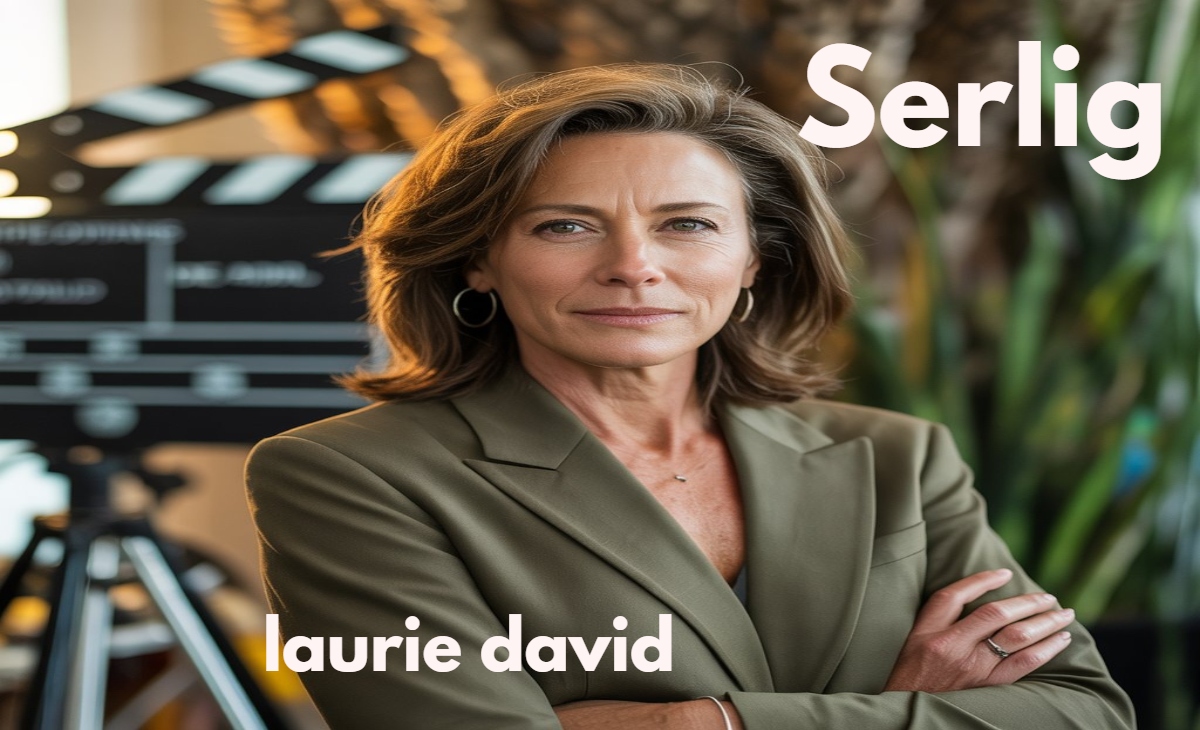
Laurie David: Hollywood Producer, Environmental Activist, and Climate Change Champion
Laurie David is one of America’s most recognized environmental activists. She is also a successful film producer and bestselling author. Few people in Hollywood have used entertainment so powerfully for social change.
She was born Laurie Ellen Lennard on March 22, 1958. Her hometown was Long Island, New York. From a middle-class Jewish family, her rise to global influence was unexpected.
She produced the Oscar-winning documentary An Inconvenient Truth in 2006, also she co-founded the Stop Global Warming Virtual March. She also wrote multiple books on climate and healthy living. Laurie David is proof that passion, platform, and purpose can change the world.
Table of Contents
- Introduction
- Early Life and Background
- Career Beginnings in Entertainment
- A “Born Again” Environmentalist
- An Inconvenient Truth: The Film That Changed Everything
- Beyond Gore: A Career of Social Action Films
- Author and Educator: Writing for Change
- Awards, Honors, and Recognition
- Controversies and Criticisms
- Conclusion
- Frequently Asked Questions (FAQs)
Early Life and Background
Laurie David grew up in a modest Jewish household on Long Island. Her family was middle class. There was nothing in her early years that predicted a career in environmental activism.
She attended Ohio University. She earned a journalism degree in 1979. That background in communication later became a core strength.
Her early years were shaped by a strong sense of curiosity. She was drawn to storytelling and media. Those instincts would define her career in powerful ways.
She did not grow up as an outdoorsy nature lover. She was not a scientist. But she became one of America’s most effective environmental voices through sheer determination.
Career Beginnings in Entertainment
After college, Laurie moved to New York City. She joined Late Night with David Letterman as a talent coordinator. She spent four years in that role.
The job sharpened her instincts. She learned how to find compelling people. She understood what makes a story work on screen. It was here she met Larry David. He was a comedian and writer. He would later co-create the hit TV show Seinfeld.
They married on March 31, 1993. The couple relocated to Los Angeles. Laurie launched her own talent management company there.
She represented comedians and comedy writers, also she produced comedy specials for HBO, Showtime, MTV, and Fox Television. She also became vice president of comedy development at a Fox Broadcasting division, also she was thriving in Hollywood. But her life was about to change direction.
A “Born Again” Environmentalist
The turning point came in 1996. Laurie David had what she calls an awakening. She became deeply alarmed about the state of the planet.
She did not ease into activism slowly, also she jumped in with both feet. Her entertainment connections became tools for a much bigger mission.
She joined the Natural Resources Defense Council (NRDC) as a trustee. The NRDC is one of the most powerful environmental organizations in the U.S. It works through science, law, and public education.
She co-founded the Detroit Project. This campaign pushed Congress and automakers to build more fuel-efficient cars. It raised public awareness about America’s dependence on oil.
The NRDC later opened the David Family Environmental Action Center. The center featured exhibits on global warming, ocean pollution, and everyday toxins. It was a direct result of her leadership.
She also co-founded the Stop Global Warming Virtual March. Her partners were Senator John McCain and Robert F. Kennedy Jr. It was one of the earliest digital environmental campaigns.
Her message was clear and simple. “If everyone does one thing, they are likely to do two things, then three things,” she said. “That’s how you build a movement.”
An Inconvenient Truth: The Film That Changed Everything
Laurie David’s greatest achievement is An Inconvenient Truth. The 2006 documentary featured former Vice President Al Gore. Director Davis Guggenheim brought Gore’s climate slideshow to the big screen.
Not everyone believed in the project at first. A documentary about carbon emissions seemed risky. Hollywood rarely bets on climate science. But Laurie David believed in it deeply. She executive produced the film. She helped transform it from a traveling lecture into a global cultural event.
The results were historic. An Inconvenient Truth won the Academy Award for Best Documentary in 2007. It became one of the most watched and discussed docs of its era.
The film shifted public opinion on climate change. It reframed the issue as urgent and real. It brought the science to millions of everyday viewers. Of course, the film also attracted criticism. Some said it oversimplified the science. Others accused Gore of making it too personal.
Laurie herself faced questions too. In a 2006 interview with The Guardian, she admitted to taking private jets and owning two homes. Critics called it hypocrisy.
She did not deny the contradiction. She acknowledged it openly. That honesty, for many, made her more credible rather than less. The film’s impact was undeniable. It energized a generation of activists. It proved that documentary filmmaking can create real change.
Beyond Gore: A Career of Social Action Films
An Inconvenient Truth was not her final film. Laurie David kept producing. Each project tackled a different systemic crisis. In 2014, she partnered with Katie Couric. Together they executive produced Fed Up. The film exposed the roots of America’s obesity crisis.
Fed Up argued that the food industry misled the public. Decades of dietary advice blamed fat. But the real culprit was sugar. The film challenged government nutrition policy. It sparked a national conversation.
In 2017, she produced The Last Animals. It documented the poaching crisis threatening elephants and rhinos. The film highlighted urgent threats to wildlife.
She also produced The Biggest Little Farm in 2018. It followed a couple building a sustainable, biodiverse farm near Los Angeles. The film inspired many to rethink food production.
Her most viewed later production was The Social Dilemma in 2020. This Netflix documentary exposed the dangers of social media algorithms. It reached a massive global audience.
Each film shared a common thread. Laurie David found hidden systems causing hidden harm. She made those systems visible and emotional. That is her signature skill.
Author and Educator: Writing for Change
Laurie David is also a prolific author. Her books are designed to inform and inspire action. Her first book was Stop Global Warming: The Solution Is You! (2006). It was published alongside An Inconvenient Truth. Robert F. Kennedy Jr. wrote the afterword. The book became a bestseller.
Next came The Down-to-Earth Guide to Global Warming (2007). This book was written for children and young readers. It won the Green Earth Book Award in the nonfiction category.
She believed children were powerful agents of change. They could teach their parents. They could influence their communities.
In 2010 she published The Family Dinner. The book advocated for shared evening meals. It argued that family dinners build stronger connections. Recipes were included alongside cultural and health arguments. The Family Cooks followed a few years later. It continued the theme of healthy, intentional eating.
Her 2021 book was Imagine It! A Handbook for a Happier Planet. She co-wrote it with Heather Reisman. It covered plastic waste, food systems, chemical pollution, and transportation.
The tone was not alarmist. It was practical. “This book is not about shame and blame,” she said. “It’s about what do we do now?” She has also been a contributing blogger for The Huffington Post. Her voice has reached audiences across media for decades.
Awards, Honors, and Recognition
Laurie David has received recognition from many respected organizations. Her awards span film, environment, and women’s leadership.
She received the EPA’s Climate Protection Award. The Producers Guild of America gave her the Stanley Kramer Award. She also won a Humanitas Prize Special Award.
The National Audubon Society honored her with the Rachel Carson Award in 2007. This award is named after the author of Silent Spring. It is one of the most prestigious honors in environmental work. She received the Feminist Majority’s Eleanor Roosevelt Award. In 2019, Bette Midler presented her with the Green Goddess Award.
Time magazine named her a “Hero of the Environment.” Vanity Fair called her the “Bono of climate change.” Glamour selected her as a “Woman of the Year” in 2006.
The NRDC gave her the Forces for Nature Award. She also won the Gracie Allen Award from American Women in Radio & Television. Each honor reflects the breadth of her impact. She has been recognized as a filmmaker, activist, educator, and leader.
Controversies and Criticisms
Laurie David’s career has not been without controversy. Critics have pointed out contradictions in her lifestyle. She owns multiple homes. She has flown on private jets. For some, this undermines her climate message.
She acknowledged the contradiction openly. “Yes, I take a private plane on holiday,” she told The Guardian in 2006. That admission was both criticized and respected.
In 2009, she faced a different kind of scrutiny. The Chilmark Township conservation commission in Martha’s Vineyard fined her. She had paved over protected wetlands on her property. Critics found the irony hard to overlook.
Her personal life also drew media attention. She and Larry David divorced in 2007. They had been married for 14 years. She cited irreconcilable differences. She later married Robert Thorpe in 2012. They have two daughters together, Cazzie Laurel and Romy March.
Through all criticism, she stayed publicly committed. She argued that no activist is perfect. The climate crisis is too urgent to wait for perfect messengers.
Conclusion
Laurie David is a rare kind of public figure. She is not a scientist or a politician. She is a communicator who chose to put her platform in service of the planet.
Her journey began in a Letterman studio. It passed through Hollywood boardrooms. It arrived on red carpets, college campuses, book tours, and legislative halls.
Her most important contribution is An Inconvenient Truth. But her legacy goes far beyond one film. She has spent nearly three decades making the invisible visible. She turns complex environmental systems into human stories.
Also she is imperfect. She has faced fair criticism. But she has also driven real, measurable change.
Laurie David proves that you do not need a lab coat or a law degree to change the world. You need conviction, creativity, and the courage to keep going. On all three counts, she has delivered.
FAQs
Who is Laurie David?
Laurie David is an American environmental activist, film producer, and author. She is best known for producing the Oscar-winning documentary An Inconvenient Truth (2006). She has spent decades advocating for climate action through film, books, and public campaigns.
What is Laurie David most famous for?
She is most famous for producing An Inconvenient Truth. The film features former Vice President Al Gore and won the Academy Award for Best Documentary in 2007. It is widely credited with raising global awareness of climate change.
Was Laurie David married to Larry David?
Yes. Laurie David and Larry David married on March 31, 1993. They divorced in 2007 after 14 years of marriage. Larry David is the co-creator of Seinfeld and star of Curb Your Enthusiasm. They have two daughters, Cazzie Laurel and Romy March.
What books has Laurie David written?
Laurie David has written and co-written several books. These include Stop Global Warming: The Solution Is You! (2006), The Down-to-Earth Guide to Global Warming (2007), The Family Dinner (2010), The Family Cooks, and Imagine It! A Handbook for a Happier Planet (2021).
What other documentaries has Laurie David produced?
Beyond An Inconvenient Truth, she produced Fed Up (2014) with Katie Couric, The Last Animals (2017), The Biggest Little Farm (2018), and The Social Dilemma (2020) for Netflix. Each film explores a different social or environmental crisis.