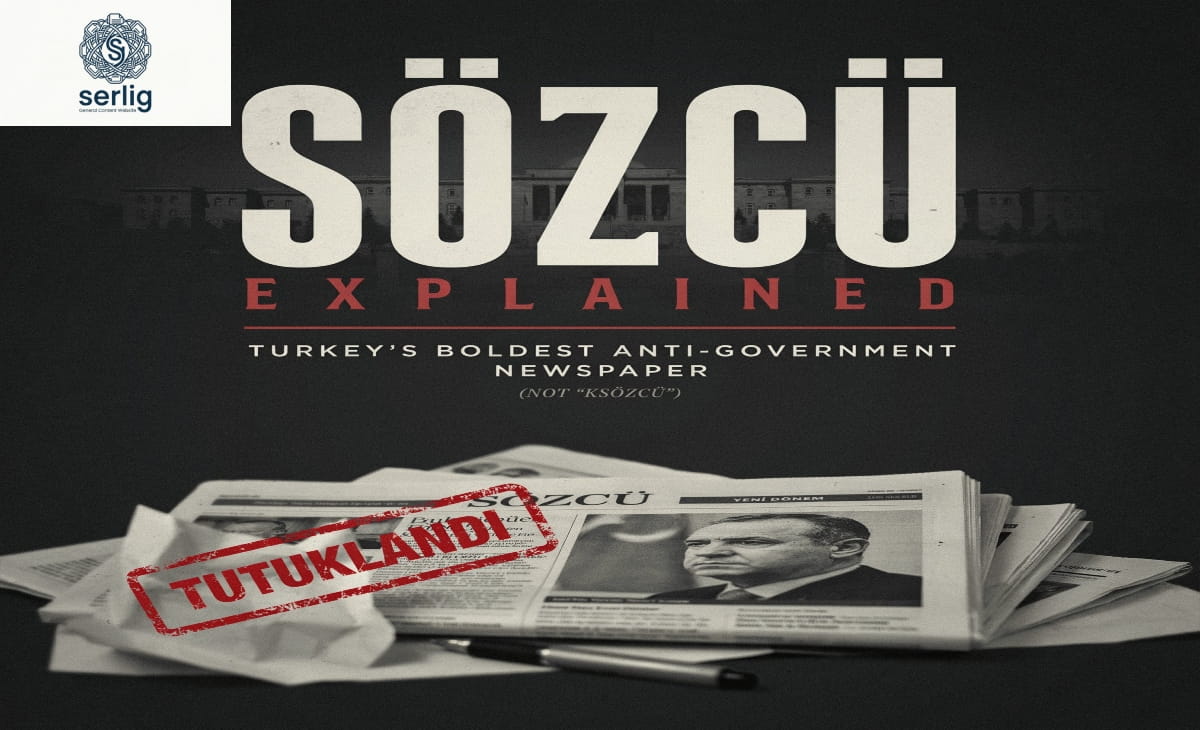
Sözcü Explained: Turkey’s Boldest Anti-Government Newspaper (Not “Ksözcü”)
If you searched “ksözcü,” here’s the short version: this word doesn’t exist in Turkish. No newspaper, brand, or cultural concept goes by that name. A few low-quality websites recently published “explainer” articles around this misspelling. They describe it as an ancient communication tradition or a digital identity symbol. None of that holds up.
Here’s what likely happened instead. Someone typed an extra letter. Or autocorrect added one. They were probably searching for Sözcü — a real, major Turkish newspaper. This article covers that actual publication.
Quick Facts: Sözcü Newspaper
| Detail | Information |
| Founded | 27 June 2007 |
| Founder | Burak Akbay |
| Predecessor paper | Gözcü (closed April 2007) |
| Editor-in-Chief | Metin Yılmaz |
| General Manager | Asım Akgül |
| Peak print circulation | ~300,000 copies/day (2018) |
| Editorial stance | Kemalist, secular, nationalist, anti-AKP |
| Parent company | Estetik Yayıncılık A.Ş. (owned by Beme Media A.G., Switzerland) |
| Sister outlets | Korkusuz, Sözcü TV, GırGır |
| Headquarters | Küçükçekmece, Istanbul |
What Is Sözcü?
Sözcü means “spokesperson” in Turkish. It’s also a major daily newspaper, and one of the most recognizable names in Turkey’s media landscape. Burak Akbay first published it on 27 June 2007, and it now circulates nationwide.
The paper grew from a modest relaunch into one of Turkey’s best-selling dailies. It built that reputation on one thing above all: consistent, often combative criticism of the country’s ruling party and its president.
Two stories run through Sözcü’s history. One is a business story — how a newspaper found a loyal readership in a crowded, heavily controlled market. The other is political — what it actually costs to publish opposition journalism in a country where that carries real risk.
Origins: From Gözcü to Sözcü
Sözcü didn’t appear from nowhere. Its roots trace back to Gözcü (“Observer”), a daily newspaper the Doğan Media Group published starting on 15 May 1996. Gözcü ran for over a decade. It ceased publication on 1 April 2007. Shortly afterward, a group of journalists tied to the old paper relaunched it under a new name that same year: Sözcü.
That staff continuity mattered. The launch team didn’t start from scratch editorially. They carried over a working newsroom culture and a clear sense of what readers wanted. They simply rebranded around a name that better signaled the paper’s self-image as a public voice.
Circulation Growth Over Time
Early sales numbers stayed modest. The newspaper sold roughly 60,000 copies in its first period. Growth picked up fast after that. Average circulation reportedly reached around 150,000 by September 2008. It crossed 200,000 by December 2010, making Sözcü one of Turkey’s highest-selling dailies.
By mid-2018, daily sales reached around 300,000 copies, placing it among Turkey’s top-selling papers. Circulation has since dropped, mirroring the global decline in print newspaper sales. Some 2022 estimates put daily print circulation in the tens of thousands, as readers shifted decisively to digital platforms.
A Newspaper Defined by Opposition
One thing set Sözcü apart from day one, and still defines it today: its editorial identity. The paper built its name on loud, sustained criticism of President Recep Tayyip Erdoğan and the ruling AKP.
“Kemalist” describes the secular, nationalist political tradition Mustafa Kemal Atatürk founded as he built the modern Turkish republic. This tradition emphasizes secularism, a unified national identity, and skepticism toward religiously influenced politics. Sözcü positions itself as a guardian of that tradition, pushing back against what it portrays as the erosion of secular institutions under AKP rule.
This stance isn’t occasional commentary. It’s close to the entire reason readers pick up the paper. Editors and analysts generally describe Sözcü’s orientation as Kemalist and nationalist, which sets it apart from other opposition papers like Cumhuriyet and BirGün — both of which lean further left and trace their roots to different opposition traditions. Through the politically polarized 2010s, Sözcü cemented its place among Turkey’s top-selling papers through this strongly critical stance. Many analysts consider it the highest-selling Turkish daily that openly and consistently criticizes the government.
That last point deserves attention. Press freedom monitors estimate that a few pro-government media groups control roughly 90% of media ownership in Turkey. Against that backdrop, a newspaper that built a mass readership specifically by opposing those in power stands out as both unusual and commercially proven.
Who Owns Sözcü?
One figure has shaped most of Sözcü’s history: Burak Akbay. He was born in Istanbul in 1971 and attended the American College of Switzerland. His first business venture involved a newspaper printing press, which gave him the foundation to launch Sözcü in 2007.
Akbay owns all shares of Estetik Yayıncılık A.Ş., the company that publishes both the newspaper and its website, sozcu.com.tr. He chaired Estetik Yayıncılık’s board until June 2016, when he resigned that role. He still appears as the paper’s official publisher of record, however.
The 2019 Move to Switzerland
The corporate structure shifted significantly in 2019. Sözcü newspaper, along with the Korkusuz newspaper, GırGır magazine, Sözcü TV, and sozcu.com.tr, all transferred to Beme Media A.G. — a holding company established in Switzerland that year. Burak Akbay sits on its board of directors.
Moving the parent company offshore carries real significance. Switzerland offers stronger institutional protections than Turkey does. Media-ownership researchers have flagged this move as notable, especially in a market where authorities have repeatedly pressured outlets critical of the government.
Day-to-day, Metin Yılmaz runs the editorial side as Editor-in-Chief, while Asım Akgül serves as general manager. The paper operates out of Istanbul’s Küçükçekmece district.
Expanding Beyond Print: The Sözcü Group
Sözcü never stayed a single-product newspaper. Over the years, it built what people now call the Sözcü Group — a small media cluster anchored by the flagship paper.
The group’s website, Sözcü.com.tr, ranks among Turkey’s most-visited news portals. The paper also publishes a European edition for the Turkish diaspora, printed in Germany. That edition matters more than it might seem: Germany hosts one of the largest Turkish communities outside Turkey, and Sözcü’s secular-opposition identity resonates strongly with that audience.
Sister Publications and Controversies
The group branched into other formats too. It has published a second daily newspaper called Korkusuz (“Fearless”) since November 2014. It launched a sports daily called AMK in June 2012.
That sports title sparked its own controversy. The name AMK officially stands for “Açık Mert Korkusuz” (“Open, Valiant and Fearless”). But most Turkish readers also recognize it as a common profane phrase. Rival columnists criticized the choice as a deliberate provocation rather than a serious editorial decision. AMK’s print run eventually ended on 5 January 2019, a casualty of the broader pressures squeezing print sports journalism.
Moving Into Television
Television became the group’s next frontier. Sözcü TV, often shortened to SZC TV, began web broadcasting in 2019 and launched on YouTube in 2021. The channel acquired a broadcast licence from Sivas SRT in 2020. Turkey’s broadcasting authority, RTÜK, delayed approval of the channel’s logo until July 2021.
Critics often describe these regulatory delays as typical friction. Independent and opposition-aligned broadcasters in Turkey frequently face slow-walked licensing decisions from a regulator widely accused of favoring outlets it views more favorably.
Operating Under Pressure
Running an opposition newspaper in Turkey has never worked as a simple commercial proposition. It comes bundled with legal and financial exposure that pro-government outlets rarely face.
Legal Challenges
Authorities have brought various lawsuits against the newspaper over the years. Charges have included supporting terrorism, betraying state secrets, and insulting the president. Both owner Burak Akbay and editor-in-chief Metin Yılmaz have appeared among the accused in different cases.
Financial Pressure Through Advertising
Financial pressure has come through other channels too. A 2020 BIA Media Monitoring Report found that Turkey’s Press Advertisement Institution imposed a combined 276 days of advertising bans on newspapers that year — Sözcü included — specifically because of their critical publications.
An advertising ban on a Turkish newspaper isn’t a minor inconvenience. State advertising allocation has long served as one of the most effective levers Turkish authorities can pull. It squeezes an outlet’s revenue directly, without drawing the international attention a formal shutdown order would attract.
A Shrinking Space for Independent Media
These pressures sit inside a media environment that keeps getting less free for opposition outlets generally. Turkey’s ranking on the Reporters Without Borders Press Freedom Index has fallen from around 100th place in 2005 to 159th in 2025. That slide mirrors a broader consolidation of the Turkish press under ownership groups seen as closer to the government.
One major example: the Demirören Group’s purchase of the Doğan Media Group. Observers widely view the Demirören Group as close to President Erdoğan, and international watchdogs consider the sale a turning point in restructuring Turkey’s media landscape. Against that backdrop, Sözcü’s survival as a mass-circulation, openly critical daily looks genuinely unusual. Most of its old print-era competitors have been bought out, softened editorially, or shut down entirely.
Where Sözcü Sits Among Turkey’s Newspapers
Sözcü’s significance becomes clearer next to the rest of the field. By circulation, Turkey’s most popular daily newspapers have historically included Sabah, Sözcü, Hürriyet, Posta, and Milliyet. Among that group, Sözcü stands out as essentially the only paper built around sustained, frontal opposition to the government, rather than explicit alignment with it or studied neutrality.
Its closer ideological peers occupy smaller niches. Cumhuriyet, historically linked to leftist movements, now serves Kemalist and nationalist readers aligned with the opposition CHP. BirGün represents left-wing opposition perspectives critical of the AKP and Erdoğan government, and many consider it one of the few remaining independent newspapers. Both operate at a fraction of Sözcü’s circulation, though. Sözcü essentially made secular-nationalist opposition journalism commercially mainstream rather than a fringe pursuit — arguably its most distinctive achievement in the Turkish newspaper market.
That mainstream positioning lines up with who actually reads it. Sözcü’s audience skews toward secular, educated, urban Turks. Many of these readers identify with the CHP (the Republican People’s Party) or similar center-left, secular-nationalist currents. For them, the paper functions less like a neutral news source and more like a trusted, identity-affirming voice in a media landscape they otherwise distrust.
Digital Reach
Sözcü has handled the print-to-digital transition under real financial strain, like virtually every newspaper of its generation. By most measures, it has managed that shift more successfully than many of its peers. The paper’s website consistently ranks among Turkey’s most-visited news portals. Its YouTube and social media channels — including a verified Instagram account with millions of followers — likely reach a larger combined audience now than the print edition ever did at its peak.
This digital expansion is also where confusion with invented terms like “ksözcü” tends to start. As more of Sözcü’s identity moves into usernames, handles, hashtags, and search queries, minor misspellings and autocomplete errors multiply. Low-effort content sites then rush to manufacture explanations for those errors, instead of simply pointing readers back to the real newspaper.
Conclusion
Sözcü’s importance goes beyond circulation numbers or corporate structure. It offers a real case study in how an opposition press can survive — and even thrive commercially — inside a media system stacked against it by most independent measures. The newspaper has weathered advertising bans, lawsuits against its leadership, and a press freedom environment that has deteriorated for two decades. Through all of that, it has kept a mass readership that seeks it out because of its willingness to criticize those in power, not despite it.
Several outside factors will determine whether that durability holds: the trajectory of Turkish press regulation, the financial sustainability of print and digital advertising, and the broader political climate the paper has spent two decades writing against. For now, though, Sözcü remains exactly what its name suggests — a loud, persistent, and commercially significant spokesperson for a segment of Turkish society that wants exactly that.
And if you came here looking for “ksözcü” — now you know where that search should have led you all along.
Don’t miss this related article on a similar topic: Julian Ozanne: The Journalist, Filmmaker, and Humanitarian Who Shaped Global Narratives
Frequently Asked Questions
What does “Sözcü” mean in English?
Sözcü translates to “spokesperson” or “speaker” in English. The name reflects the paper’s self-image as a voice for its readers and for secular, opposition-minded Turks more broadly.
Is “ksözcü” a real word or term?
No. “Ksözcü” isn’t a recognized Turkish word, media outlet, or cultural concept. It almost certainly started as a typo or autocorrect error for “Sözcü,” the actual newspaper.
Who owns the Sözcü newspaper today?
Burak Akbay founded Sözcü and still controls it through Estetik Yayıncılık A.Ş. Since 2019, the broader group has operated under Beme Media A.G., a holding company based in Switzerland.
What political stance does Sözcü take?
Sözcü follows a Kemalist, secular, and nationalist editorial line. It’s known for consistent, outspoken criticism of President Erdoğan and the ruling AKP, distinguishing it from Turkey’s more government-aligned mainstream papers.
Has Sözcü faced government pressure?
Yes. The paper and its leadership have faced multiple lawsuits, including charges of supporting terrorism and insulting the president. Authorities have also imposed advertising bans on the paper over its critical coverage.