Tungsten Volfram Explained: The Indestructible Metal Hiding in Your Lightbulb, Ring & Missiles
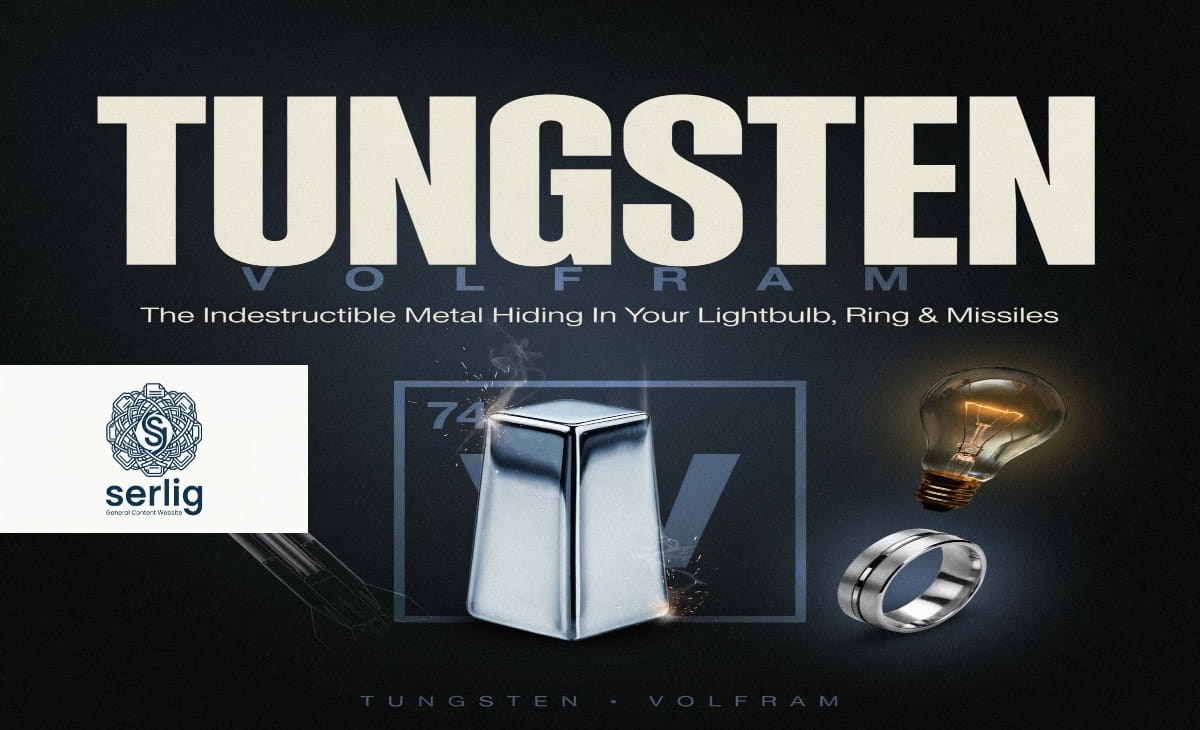
Tungsten Volfram goes by another name in many parts of the world: volfram. This dense, hard, silvery-white metal carries the chemical symbol W and sits at atomic number 74 on the periodic table. Engineers prize it for one simple reason: no other natural metal handles extreme heat, weight, and wear quite like it does. Light bulb filaments rely on it. Armor-piercing ammunition uses it. Surgeons trust it inside radiation shielding. Tungsten shapes daily life in ways most people never notice.
Quick Facts About Tungsten (Volfram)
| Property | Detail |
| Chemical symbol | W |
| Atomic number | 74 |
| Alternative name | Volfram (wolfram) |
| Melting point | 3,422°C (6,192°F) — highest of all metals |
| Density | 19.3 g/cm³ (nearly equal to gold) |
| Discovered | 1783, by Juan José and Fausto Elhuyar |
| Main ores | Wolframite, scheelite |
| Top producer | China |
| Common uses | Light bulb filaments, drill bits, jewelry, ammunition, radiation shielding |
What Is Tungsten/Volfram?
Tungsten Volfram belongs to group 6 of the periodic table, among the transition metals. Swedish for “heavy stone,” the word “tungsten” describes the metal accurately, since it weighs nearly as much as gold for the same volume. Many countries across Eastern Europe, Scandinavia, and Asia instead call it “volfram.” That name comes from wolframite, one of the two main ores miners extract it from. This naming split explains why chemists use the symbol W instead of T.
Chemists identified tungsten in the 1780s. Swedish chemist Carl Wilhelm Scheele first proposed the element’s existence after studying the mineral scheelite. Spanish brothers Juan José and Fausto Elhuyar then isolated the pure metal from wolframite ore shortly after. That discovery launched tungsten into an industrial role that keeps expanding today.
Key Properties That Make Tungsten Unique
Tungsten’s exceptional physical and chemical properties set it apart from nearly every other naturally occurring metal.
Highest Melting Point of Any Metal
No metal melts at a higher temperature than tungsten, which holds out until roughly 3,422°C (6,192°F). Only carbon, a non-metal, beats it. This single property explains why manufacturers reach for tungsten in light bulb filaments, rocket nozzles, and furnace components built to survive extreme heat.
Exceptional Density
Tungsten Volfram weighs in at about 19.3 grams per cubic centimeter, nearly matching gold’s density. Engineers exploit this trait in counterweights, radiation shielding, and ammunition, where compact weight matters more than size.
Hardness and Strength
Pure tungsten already ranks as hard, but combining it with carbon produces tungsten carbide, one of the toughest industrial materials available. Tungsten carbide tools cut, grind, and drill through materials that would wreck ordinary steel equipment.
Excellent Electrical and Thermal Conductivity
Tungsten conducts both heat and electricity efficiently. Combined with its heat resistance, this conductivity makes it valuable in electrical contacts, electrodes, and heating elements.
Low Vapor Pressure and Thermal Expansion
Even at high temperatures, tungsten evaporates slowly and barely expands. This stability under thermal stress matters enormously in aerospace and electronics, where components can’t afford to warp.
Where Tungsten Comes From
Nature never produces tungsten as a free metal. It hides instead inside mineral compounds, mainly wolframite (iron manganese tungstate) and scheelite (calcium tungstate). Miners extract these ores, then crush and process them through several chemical steps to yield pure tungsten metal or tungsten compounds.
China leads global Tungsten Volfram production by a wide margin, supplying most of the world’s mined tungsten. Vietnam, Russia, Bolivia, and a handful of European and North American countries hold smaller but strategically valuable reserves. Many governments now classify tungsten as a critical raw material because of its industrial and defense importance. This status has pushed supply chain security and source diversification higher up the political agenda.
Major Applications of Tungsten
Lighting and Electronics
For over a century, tungsten filaments formed the heart of incandescent light bulbs, glowing white-hot without melting thanks to the metal’s extraordinary heat resistance. LED technology has replaced incandescent bulbs in most homes, yet manufacturers still use tungsten filaments in specialty lighting, halogen bulbs, and certain industrial lamps. Electrical contacts, vacuum tube components, and X-ray tube targets also depend on tungsten’s ability to withstand intense heat and electron bombardment.
Cutting Tools and Industrial Machinery
Tungsten carbide forms the backbone of modern machining and construction. Drill bits, saw blades, milling tools, and mining equipment frequently carry tungsten carbide tips or coatings because of their hardness and wear resistance. These tools hold a sharp edge far longer than standard steel equivalents.
Aerospace and Defense
Defense and aerospace industries rely heavily on tungsten for several reasons. Its density makes it effective in kinetic energy penetrators, used inside armor-piercing ammunition and missile components. Manufacturers also substitute tungsten alloys for depleted uranium in certain munitions, achieving comparable density without radioactive concerns. Rocket nozzles and heat shields benefit from tungsten’s resistance to extreme thermal stress during flight.
Medical and Radiation Shielding
Tungsten’s high density makes it an effective radiation blocker. Hospitals install tungsten shielding inside radiation therapy equipment and diagnostic imaging devices. Surgical instruments and radioactive source containers also use tungsten alloys, where strength and radiation-blocking ability both matter.
Jewelry and Consumer Goods
Tungsten carbide has become a popular choice for rings and other jewelry because of its scratch resistance and polished shine. That shine can resemble platinum or white gold at a fraction of the cost. Couples increasingly choose tungsten wedding bands since they resist scratching far better than traditional precious metals.
Chemical and Catalytic Uses
Manufacturers use tungsten compounds like tungsten oxide and tungsten disulfide as catalysts in chemical reactions, including petroleum refining. Tungsten disulfide also works as a dry lubricant in high-temperature or vacuum environments, where conventional oils would fail.
Tungsten Alloys and Compounds
Pure tungsten rarely appears alone in industrial applications, since its brittleness limits direct use despite its hardness. Manufacturers instead combine tungsten with other elements to create alloys with tailored properties.
Tungsten Volfram carbide, formed by combining tungsten with carbon, ranks as the most commercially significant tungsten compound. Its hardness and wear resistance make it ideal for cutting tools, mining equipment, and even bullet cores. Tungsten steel alloys boost hardness and heat resistance further, proving valuable in high-speed cutting tools and certain armor plating.
Heavy metal alloys combining tungsten with nickel, iron, or copper deliver high density without depleted uranium’s radioactivity. Counterweights, aircraft balancing components, and specialized ammunition all use these alloys.
Health and Environmental Considerations
Metallic tungsten carries relatively low toxicity compared to many other heavy metals. Certain tungsten compounds and tungsten dust, however, can pose health risks if inhaled in significant quantities over time, potentially affecting respiratory health. Workers in tungsten mining, processing, or machining typically follow safety protocols, including proper ventilation and protective equipment, to limit exposure.
Tungsten mining can also strain the environment in ways similar to other hard rock mining operations. Common issues include habitat disruption, water contamination, and waste rock management challenges. Demand for tungsten keeps growing alongside expanding industrial and technological applications, so sustainable mining practices and recycling efforts have become increasingly important. Recycling scrapped tungsten carbide tools and used electronics helps reduce the environmental footprint of new mining while conserving this valuable resource.
Tungsten’s Strategic and Economic Importance
Numerous governments, including the United States and the European Union, classify tungsten as a strategic or critical mineral. This reflects its central role in defense manufacturing, electronics, and heavy industry. The classification also signals real concerns about supply chain vulnerabilities, since production concentrates in a small number of countries.
Price swings in tungsten markets ripple across industries that depend on the metal, from automotive manufacturing to defense contracting. Countries have intensified efforts to diversify supply chains, build domestic mining and processing capacity, and improve recycling rates. The goal: reduce dependence on any single source nation.
Conclusion
Tungsten Volfram, may not be a household name like gold, silver, or iron, but its impact on modern life runs deep. Cutting tools that shape infrastructure, components that protect soldiers, and parts that power advanced electronics all depend on it. Tungsten’s rare combination of density, hardness, and heat resistance makes that possible. Demand for high-performance materials keeps growing, and tungsten’s role across aerospace, medicine, and consumer goods will likely expand right along with it. This one element offers a window into the hidden materials science behind much of the technology and infrastructure people rely on every day.
Explore more by reading this related post: Kraft Paper Bags: 7 Powerful Reasons They’re the World’s Smartest Eco Packaging Choice (2026 Guide)
Frequently Asked Questions
What is the difference between tungsten and volfram?
Nothing chemically — they’re the same element. “Tungsten” comes from Swedish (“heavy stone”), while “volfram” comes from the mineral wolframite. Different regions simply adopted different names, which is also why the chemical symbol is W rather than T.
Why does tungsten have the symbol W instead of T?
The symbol W comes from “wolfram,” the element’s older and still widely used name in much of Europe and Asia. Chemists settled on W internationally even though English speakers commonly say “tungsten.”
Is tungsten the hardest metal on Earth?
Pure tungsten is hard but not the hardest metal on its own. Tungsten carbide, a compound formed with carbon, is what reaches extreme hardness levels, making it a favorite for cutting tools and industrial machinery.
Is tungsten radioactive or toxic?
No, tungsten metal isn’t radioactive, and it carries relatively low toxicity compared to many heavy metals. Some tungsten dust and compounds can pose respiratory risks with heavy, prolonged exposure, so industrial workers follow standard safety precautions.
Why are tungsten rings so popular?
Tungsten carbide rings resist scratches far better than gold, silver, or platinum, and they hold a polished shine for years. That durability, combined with a lower price point, makes them a popular choice for wedding bands and everyday jewelry.