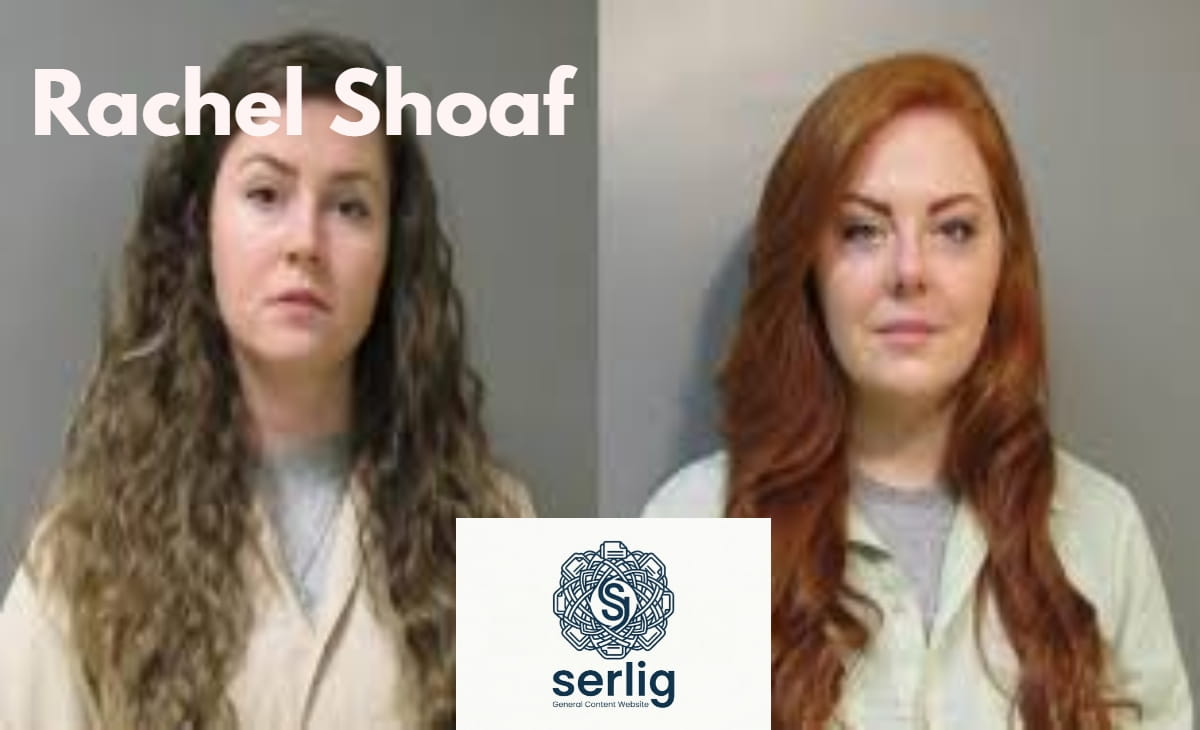
She Smiled at Vigils While Hiding a Body: The Dark Truth About Rachel Shoaf
Few true crime cases have gripped America quite like the murder of Skylar Neese. A 16-year-old West Virginia girl lost her life in July 2012 — killed by two of her closest friends. Rachel Shoaf stands at the center of this haunting case. Her story reveals teenage betrayal at its darkest: a premeditated killing, months of calculated deception, and a confession that finally broke the silence. From the night of the murder to her repeated parole denials, Rachel Shoaf’s case forces us to ask hard questions about guilt, secrets, and what justice really means.
Quick Fact Table
| Detail | Info |
| Full Name | Rachel Shoaf |
| Date of Birth | c. 1995–1996 (Morgantown, WV) |
| Age at Time of Crime | 16 years old |
| Victim | Skylar Neese, 16 |
| Date of Murder | July 6, 2012 |
| Location of Murder | Wayne Township, Greene County, Pennsylvania |
| Co-Defendant | Shelia Eddy |
| Plea | Guilty — Second-Degree Murder (2013) |
| Sentence | 30 years, parole eligible after 10 years |
| Current Location | Lakin Correctional Center, West Columbia, WV |
| Parole Status | Denied 2023, Denied 2024; eligible June 2026 |
| Docuseries | Friends Like These — Hulu, March 6, 2026 |
Who Is Rachel Shoaf?
Rachel Shoaf grew up in Morgantown, West Virginia, and attended University High School. She shared classes, secrets, and social media posts with two girls she called her best friends — Shelia Eddy and Skylar Neese. From the outside, the three were inseparable. Shoaf and Neese met during their freshman year. Eddy and Neese had been close since age 8. Together, the trio seemed like a typical group of teenage girls navigating high school life.
But something toxic was growing beneath that ordinary surface. Hidden secrets, a covert relationship, and a deadly plan were taking shape — one that Skylar Neese never saw coming.
The Night Everything Changed: July 6, 2012
After midnight on July 6, 2012, Skylar Neese climbed out of her bedroom window at her Star City apartment. She trusted the two girls waiting for her. Surveillance footage caught her sliding into the back seat of a sedan — Shelia Eddy behind the wheel, Rachel Shoaf in the passenger seat. It looked like a normal teenage joyride.
It was a death trap.
The three drove across the state line into Greene County, Pennsylvania. Deep in a wooded area in Wayne Township, far from witnesses, Shoaf and Eddy attacked. They had planned it carefully — agreeing to stab at the same moment so neither could hesitate or back out. They killed Skylar Neese. Then they left her body partially buried under brush and drove home.
The Cover-Up: Smiling Through the Lies
What Shoaf and Eddy did next was perhaps the most chilling part of the entire case. Rather than flee or confess, they pretended to grieve.
Shoaf posted missing person fliers. She visited the Neese family home and offered comfort to Skylar’s devastated parents. She attended vigils, also she posted on social media about missing her best friend. Both girls performed grief with cold precision.
For months, investigators hit dead ends. Dave and Mary Neese, Skylar’s parents, desperately searched for answers. The community held its breath. No one suspected the two girls who cried loudest at every candlelight vigil.
Meanwhile, the psychological weight grew too heavy for Shoaf. She began to unravel. By late 2012, she reportedly suffered a mental breakdown severe enough to require admission to a psychiatric facility. That breakdown eventually ended the cover-up.
The Confession That Cracked the Case
Shoaf’s confession changed everything. About seven months after the murder, she broke down and told investigators the truth. In January 2013, she led police to the remote Pennsylvania site where Skylar’s remains lay hidden. Investigators found the body under branches in Wayne Township — nearly nine months after the killing.
Shoaf went further than just confessing. She agreed to wear a wire during a conversation with Eddy to help investigators build their case. That act of cooperation — turning against her partner in crime — carried significant legal weight. Without Shoaf’s confession, investigators may never have solved the case or found Skylar’s body.
As investigative journalist Justine Harman later noted: “Without Rachel’s confession, they probably would’ve gotten away with it.”
The Legal Proceedings: Guilty Plea and 30-Year Sentence
Once Shoaf confessed and the body was found, the legal process moved fast.
On May 1, 2013, the U.S. Attorney’s Office of the Northern District of West Virginia announced Shoaf’s guilty plea to second-degree murder. She agreed to adult status — a critical decision that affected her sentencing. Her cooperation earned her a lighter sentence than Eddy received.
At sentencing in Monongalia County Circuit Court, a 17-year-old Shoaf addressed the court: “The person that did that was not the real me. I became scared, caught up in something that I did not want to do.”
The prosecution pushed back hard. Prosecutors told the court that Shoaf and Eddy had joked about killing Skylar in science class — evidence of a plan, not a moment of panic.
Dave Neese, Skylar’s father, rejected Shoaf’s apology with fury: “Rachel Shoaf murdered my daughter in cold blood. She can take her apologies and sit on them.”
The court sentenced Shoaf to 30 years in prison, with parole eligibility after 10 years. Shelia Eddy, who eventually pleaded guilty to first-degree murder, received a life sentence with the possibility of parole after 15 years.
The Real Motive: A Secret They Killed to Protect
For years, the stated motive seemed almost absurdly thin. When investigators asked Shoaf why they killed Skylar, she gave a chilling answer: “We just didn’t like her,” according to State Police Corp. Ronnie Gaskin.
Skylar’s family never accepted that explanation. They were right to push.
The truth emerged over a decade later — at Shoaf’s 2023 parole hearing. Dave Neese publicly confirmed what Shoaf admitted during the hearing: Shoaf and Eddy were in a secret romantic relationship. They feared Skylar would expose them. Rather than face that exposure, they decided to eliminate the threat permanently.
“We found out finally after 11 long years what the real reason why they murdered Skylar,” Dave Neese said. “She was in a relationship with Shelia Eddy — a gay relationship — and they were both afraid Skylar was going to tell people.”
This revelation reframes the entire case. The murder was not impulsive or random. Shoaf and Eddy killed their friend to bury a secret. Skylar Neese died because she knew too much about the people she trusted most.
Life Behind Bars: Who Is Rachel Shoaf Today?
Rachel Shoaf has now spent over a decade at Lakin Correctional Center in West Columbia, West Virginia. She transferred there from a juvenile facility when she turned 18.
Inside prison, Shoaf has worked hard on her rehabilitation. She earned a Bachelor’s degree in communications and a cosmetology certificate. She started a prayer group, leads a choir, and directs holiday plays for fellow inmates. At her 2024 parole hearing, she told the board her growth and maturity since age 16 proved she could contribute productively to society.
In a strange twist, both Shoaf and Eddy serve their sentences at the same facility. They reportedly see each other daily in common areas but are no longer close. Their relationship fractured when Shoaf’s confession directly implicated Eddy and led to her arrest.
During her incarceration, Shoaf also married a former cellmate. She later began a relationship with another inmate named Amy Cobb. The two were separated as cellmates but continued seeing each other in the prison’s recreational yard.
Both women receive enormous volumes of fan mail due to their high-profile status — a fact that raises uncomfortable questions about how some corners of true crime culture treat convicted killers.
Parole Denials: 2023, 2024, and What Comes Next
Shoaf first became parole-eligible around 2022–2023. The board denied her request for the first time in May 2023.
At her second hearing in July 2024, she again argued her case, citing her academic and vocational achievements. The board deliberated for roughly 10 minutes before denying her again. They cited two specific concerns: a disciplinary write-up since her previous hearing, and no solid home plan in place.
Skylar’s parents attended both hearings and opposed her release strongly. Mary Neese stated she does not believe Shoaf is genuinely remorseful. Dave Neese called both Shoaf and Eddy “cold-blooded killers” who “never deserve to walk free again.”
Shoaf waived her 2025 hearing. Her next parole eligibility falls in June 2026. To succeed, she must demonstrate a clean disciplinary record and present a credible home plan — two things the board flagged as critical requirements after her 2024 denial.
Skylar’s Legacy: A Life That Deserved More
Skylar Neese was more than a victim. She was a straight-A student with a 4.0 GPA, a part-time job, and a dream of becoming a lawyer. Friends and family described her as warm, loyal, and full of energy. Her murder at 16 cut short a life built on promise.
Her death sparked real legislative change. The West Virginia Legislature passed “Skylar’s Law” in 2013, strengthening missing persons reporting and response protocols across the state.
Dave Neese also launched “Skylar’s Promise” — a pledge encouraging young people to speak up when something feels wrong. “It’s so important to me that this never happens again to anyone,” he said. “I wouldn’t wish it on the two people that put me through it.”
Skylar’s story has also inspired ongoing community conversations about toxic teen relationships, the pressure of keeping secrets, and the importance of mental health support for young people.
The 2026 Hulu Docuseries Reignites National Attention
Nearly 14 years after the murder, Friends Like These: The Murder of Skylar Neese debuted on Hulu on March 6, 2026. The three-part docuseries, directed by Clair Titley, brought the case back into mainstream conversation with fresh intensity.
The series uses Skylar’s own words — her social media posts, texts, and personal messages — alongside interviews with investigators, FBI agents, family members, and behavioral experts. It examines how digital footprints helped crack the case and how toxic friendship dynamics can spiral toward unthinkable outcomes.
The docuseries focuses on the human story rather than sensationalism. It explores the pressures of adolescent identity, the role of social media in exposing and hiding relationships, and the devastating gap between how Shoaf and Eddy appeared online versus what they were hiding in real life.
The show has reignited debate about central questions the case raises: How do ordinary teenagers become capable of premeditated murder? What does justice look like when the perpetrators were minors? And can someone who commits such a crime at 16 genuinely change by their late twenties?
Youth, Crime, and Rehabilitation: The Bigger Debate
The Rachel Shoaf case sits at a difficult intersection of justice and human development. She committed a brutal, premeditated murder at 16. She also agreed to be tried as an adult, confessed voluntarily, cooperated with investigators, and has spent a decade demonstrating what looks like genuine transformation.
American criminal justice struggles with exactly this tension. Science confirms that the adolescent brain — particularly the areas governing impulse control and long-term consequence reasoning — is not fully developed until the mid-twenties. That fact does not erase what Shoaf did. But it complicates how society should respond to it.
The parole board’s repeated denials suggest they are not yet satisfied. Skylar’s family’s fierce opposition reflects a grief that no parole hearing can address. And the public’s sustained fascination with this case reflects something deeper — a collective difficulty making sense of how a smiling teenager can hide a murder under a pile of missing person fliers.
Conclusion
Rachel Shoaf enters June 2026 at a crossroads. She has spent her entire adult life behind bars. She earned degrees, built skills, and by many institutional measures has become a fundamentally different person from the 16-year-old who drove into the Pennsylvania woods on a summer night in 2012.
The parole board will decide whether that change is enough. Skylar’s family will continue arguing it is not. And the public — now re-engaged by a Hulu docuseries — will watch closely.
What remains beyond debate is this: on July 6, 2012, Skylar Neese trusted two girls with her life. They took it. A bright, ambitious teenager who dreamed of becoming a lawyer never got the chance to grow up. Rachel Shoaf did. Whether she walks free — and when — is a question still waiting for its final answer.
Skylar Neese deserved better. Her memory demands we never forget that.
Continue reading with this related post: Did Ed Gein Kill Adeline Watkins? The Shocking Truth Behind His Proposal and the Bodies Found in His House
Frequently Asked Questions
Why did Rachel Shoaf kill Skylar Neese?
The publicly stated motive for years was that Shoaf and Eddy simply “didn’t like” Skylar anymore. However, the true motive emerged at Shoaf’s 2023 parole hearing. Shoaf and Sheila Eddy were in a secret romantic relationship. They feared Skylar would expose them, so they planned and carried out her murder to keep their relationship hidden.
What sentence did Rachel Shoaf receive?
Rachel Shoaf received a 30-year prison sentence after pleading guilty to second-degree murder in 2013. She became eligible for parole after 10 years. Her sentence was lighter than Sheila Eddy’s life term because she confessed, cooperated with investigators, and agreed to wear a wire against Eddy.
Has Rachel Shoaf been granted parole?
No. The parole board denied Shoaf’s requests in May 2023 and again in July 2024. She waived her 2025 hearing. Her next parole eligibility is June 2026. The board previously cited a disciplinary write-up and the absence of a home plan as reasons for denial.
Where is Rachel Shoaf now in 2026?
As of 2026, Rachel Shoaf remains incarcerated at Lakin Correctional Center in West Columbia, West Virginia — the same facility where Sheila Eddy also serves her sentence. While they are housed together, the two are reportedly no longer close.
What is the Hulu docuseries about Rachel Shoaf and Skylar Neese?
Friends Like These: The Murder of Skylar Neese is a three-part true crime docuseries that premiered on Hulu on March 6, 2026. Directed by Clair Titley, it revisits the 2012 murder using social media posts, Skylar’s own words, and new interviews with investigators, family members, and experts. It examines teen friendship dynamics, digital-age secrets, and the events that led to Skylar’s death.